Honda CBR1000RR SP2 Review An In-Depth Look at the Track-Focused Superbike







Entering the World of HRC Racing
When it comes to high-performance superbikes, few machines command the same level of respect as the Fireblade. In this comprehensive Honda CBR1000RR SP2 review, we are diving deep into one of the most technologically advanced and exclusive motorcycles Honda has ever produced. Introduced in 2017, the Honda CBR1000RR Fireblade SP2 is not just a standard sportbike; it is a limited-production, race-focused homologation special engineered specifically to meet the stringent requirements of the World Superbike Championship (WSBK).
What exactly is the Fireblade SP2? Fundamentally, it is a masterclass in lightweight engineering and explosive power. While the standard Fireblade and the SP version are incredible machines in their own right, the SP2 improves upon them by introducing a highly modified cylinder head, larger valves, and lightweight forged wheels designed explicitly for track dominance. Honda created this masterpiece for a very specific audience: professional racers, dedicated track day riders, and hardcore sportbike enthusiasts who demand zero compromises.
Consequently, the SP2 was never intended for the casual daily commuter. By limiting production to a mere 500 units globally to satisfy FIA homologation rules, Honda ensured that the SP2 remained a rare collector’s item and a lethal weapon on the circuit. Whether you are analyzing the Fireblade SP2 specs for your next purchase or simply dreaming about track days, this bike represents the pinnacle of Honda Racing Corporation’s (HRC) engineering prowess.
The Fireblade Legacy and Evolution
To truly appreciate the SP2, we must first look back at the rich history of the Fireblade series. The very first Fireblade, the legendary CBR900RR, was launched in 1992. It revolutionized the sportbike industry by shattering the convention that liter-bikes had to be heavy and cumbersome. Instead, Honda focused on the concept of “Total Control,” balancing immense power with a revolutionary lightweight design that gave it the agility of a 600cc machine.
Over the decades, the Fireblade evolved, constantly pushing the boundaries of technology, aerodynamics, and engine performance to keep up with an increasingly competitive modern superbike landscape. As rival manufacturers began releasing highly specialized, track-only variants of their flagship bikes, Honda realized they needed to elevate the Fireblade to maintain their dominance in international racing.
Therefore, Honda created the SP and SP2 variants. The SP was designed as a premium street and track bike equipped with top-tier suspension and brakes. However, to compete at the absolute highest level in the World Superbike Championship, Honda needed a homologation machine. The SP2 was born out of this necessity. It provided race teams with a vastly superior base engine that could be heavily tuned and modified with HRC racing kits, solidifying its place in the modern racing pantheon.
Honda CBR1000RR-R SP Review
Detailed Honda Fireblade SP2 Specs
Understanding the raw numbers is crucial when evaluating a homologation special. The Fireblade SP2 specs reveal a machine that has been meticulously optimized for maximum efficiency, speed, and handling. Below is a detailed breakdown of the bike’s core specifications.
| Specification | Details |
| Engine | 999cc Liquid-Cooled Inline-4 |
| Power | ~189 hp @ 13,000 rpm |
| Torque | ~114 Nm @ 11,000 rpm |
| Top Speed | ~186 mph (Electronically Limited) |
| Transmission | 6-speed with Quickshifter |
| Weight | ~195 kg wet |
| Fuel Tank | 16 Liters (Titanium) |
| Suspension | Öhlins Electronic Control (Semi-active) |
| Brakes | Brembo 4-piston calipers, dual disc |
At the heart of the SP2 sits a heavily revised 999cc engine that produces approximately 189 horsepower at a screaming 12,500 to 13,000 rpm. This translates to extremely strong acceleration and track-ready performance that pulls relentlessly through the higher rev ranges. Furthermore, keeping the wet weight down to roughly 195 kg ensures an incredible power-to-weight ratio, which is exactly why the Honda Fireblade SP2 top speed can easily hit the 186 mph (299 km/h) mark on long straightaways.
CBR1000RR SP2 Horsepower & Engine Performance
When dissecting the CBR1000RR SP2 horsepower, it becomes clear that Honda engineers left no stone unturned. The powerplant is a highly refined, liquid-cooled inline-four engine. To squeeze out every ounce of performance, Honda implemented a blistering high compression ratio of 13.0:1, pushing the engine to a 13,000 rpm redline.
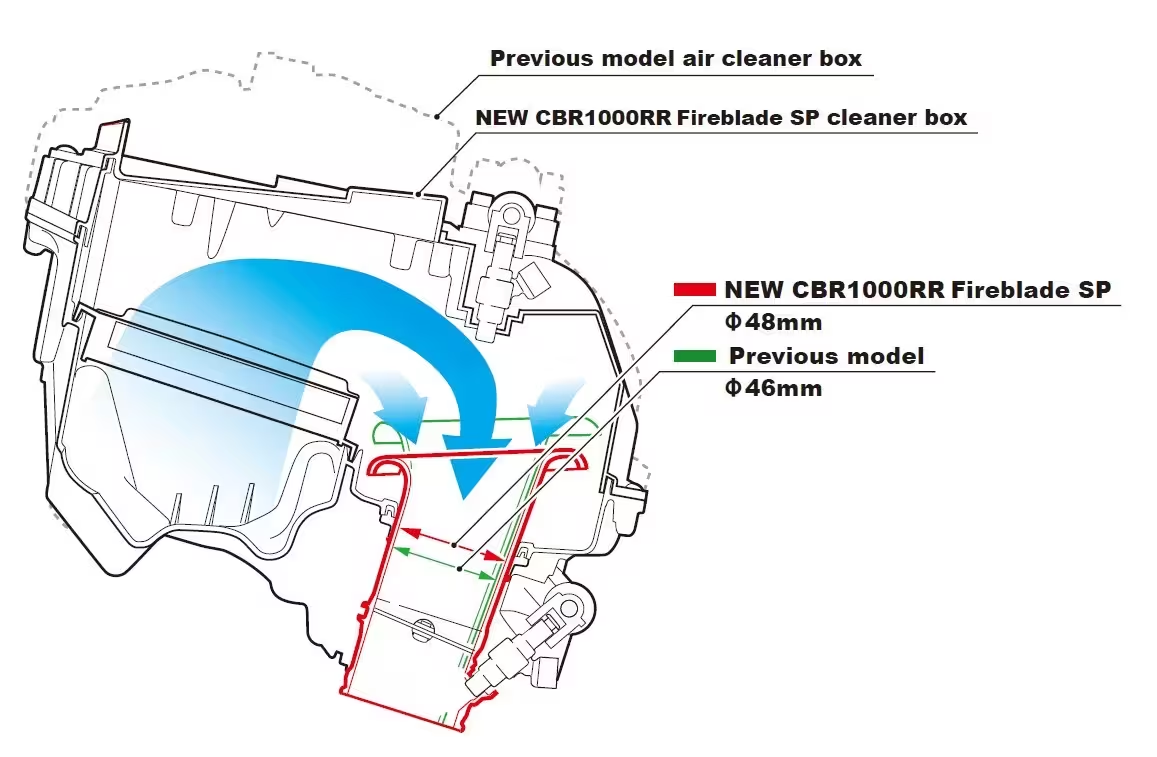
What truly separates the SP2 engine from the standard SP model is its internal architecture. Honda redesigned the cylinder head specifically for racing. The SP2 features 1mm larger intake valves (31.5mm) and 1.5mm larger exhaust valves (25.5mm), along with altered valve angles (10° intake / 12° exhaust). Furthermore, the engineers utilized lighter internal components, including an exclusive piston crown design and a shorter, lighter piston pin. These changes drastically improve airflow, optimize combustion efficiency, and allow the engine to accommodate high-lift racing camshafts.
Additionally, the advanced throttle-by-wire system provides incredibly precise fueling. The power delivery is exceptionally linear, meaning the acceleration performance is explosive yet predictable. Across the RPM range, riders will feel a surge of mid-range torque that transitions seamlessly into a screaming top-end rush. On the track, this allows for aggressive corner exits without the power delivery feeling overly abrupt, showcasing Honda’s commitment to “Total Control.”
Aggressive Design & Aerodynamics
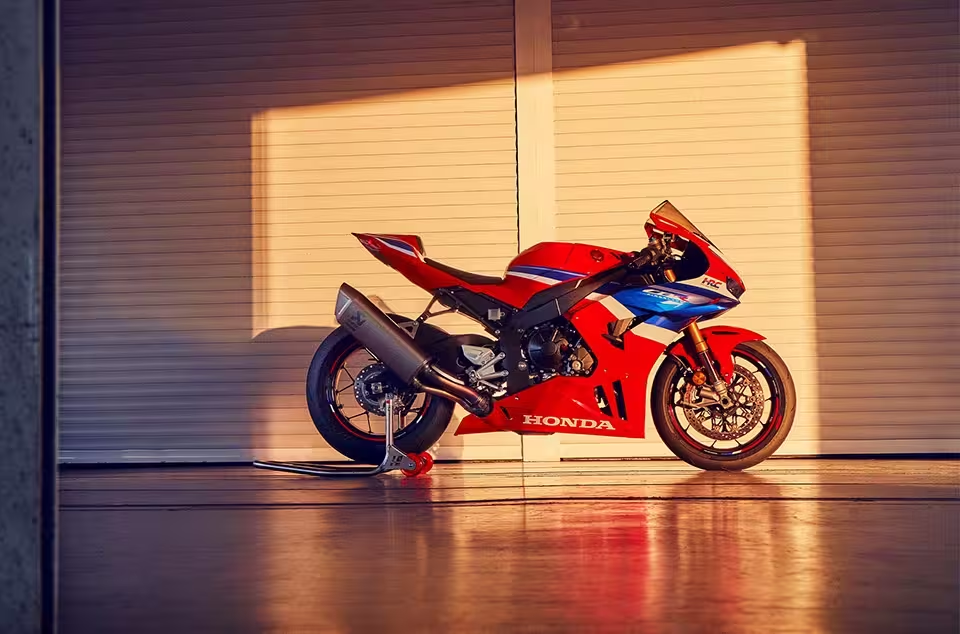
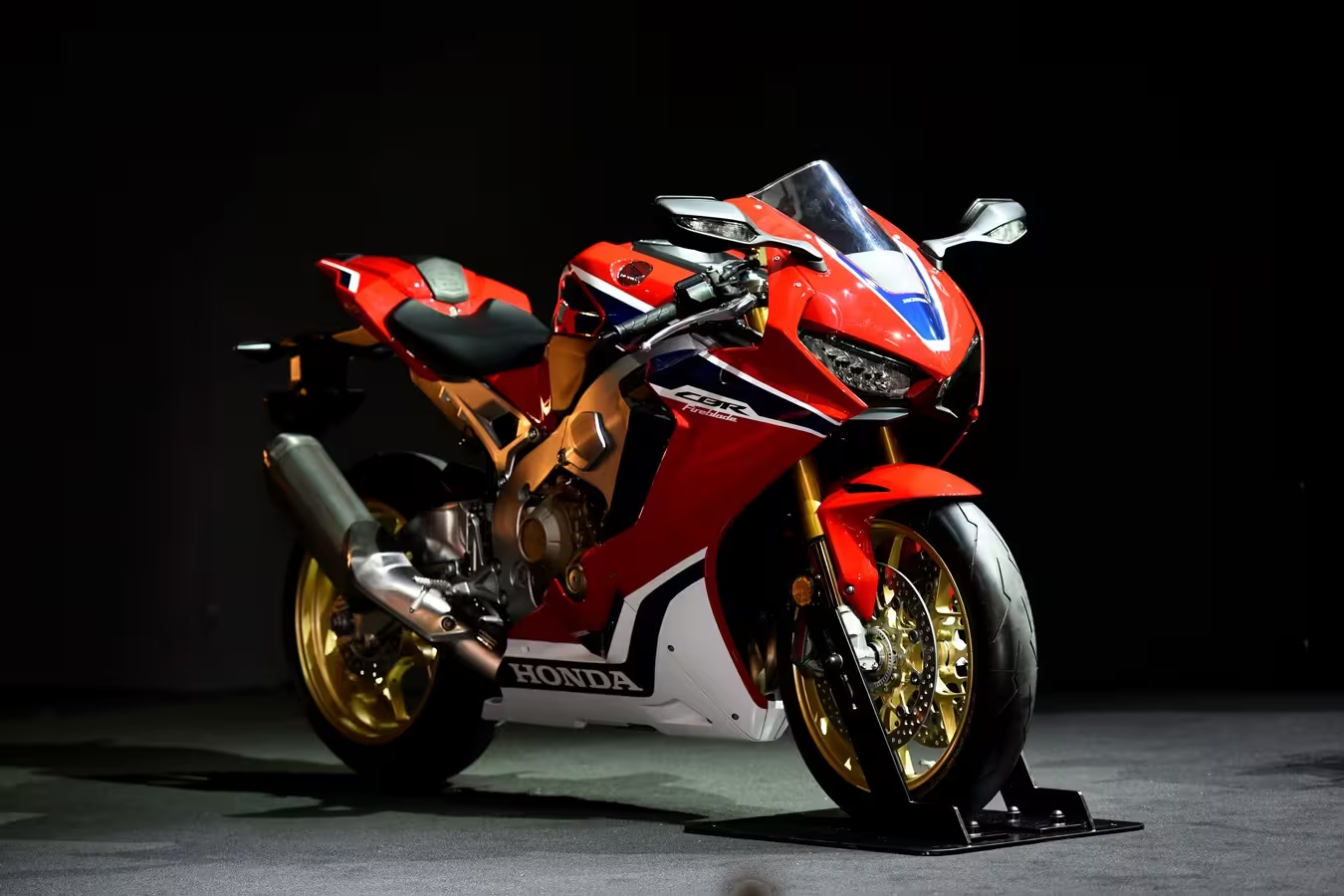
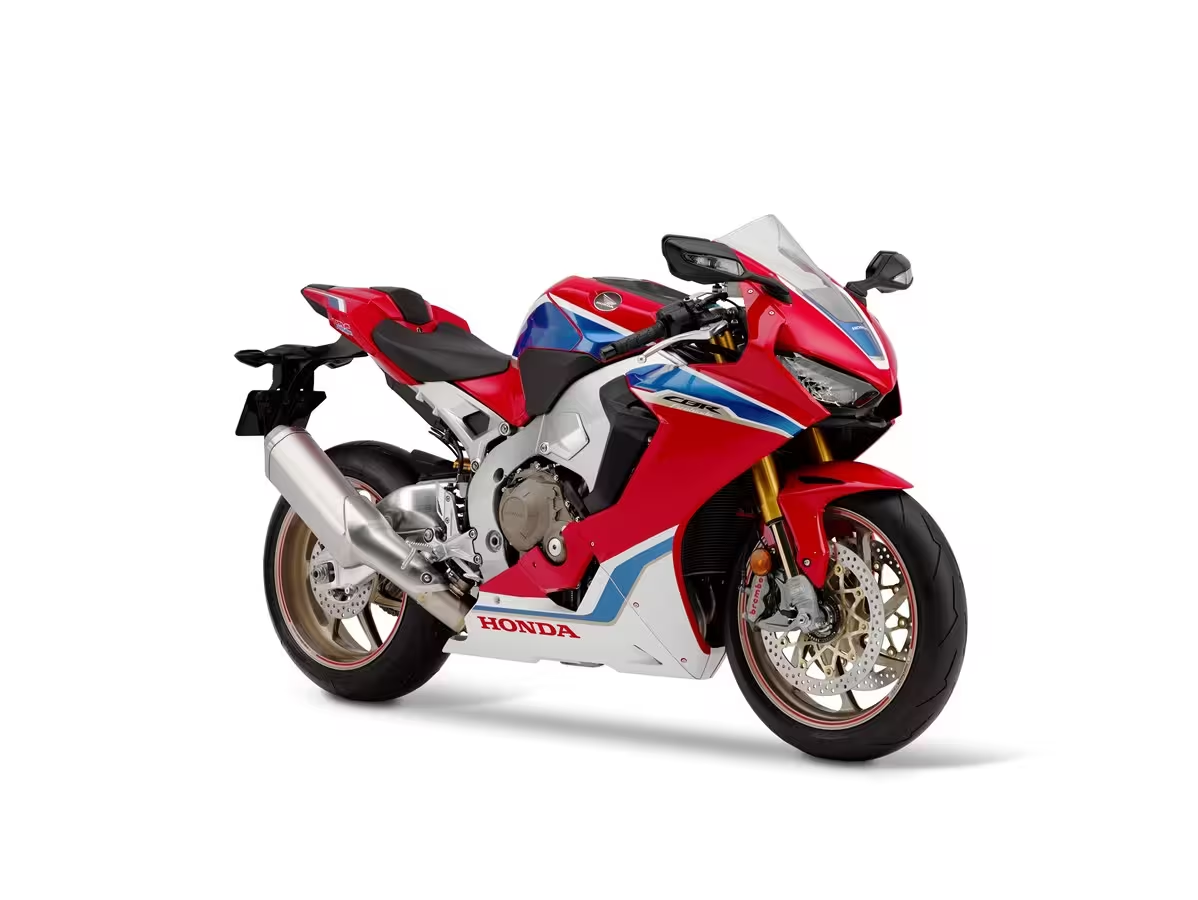
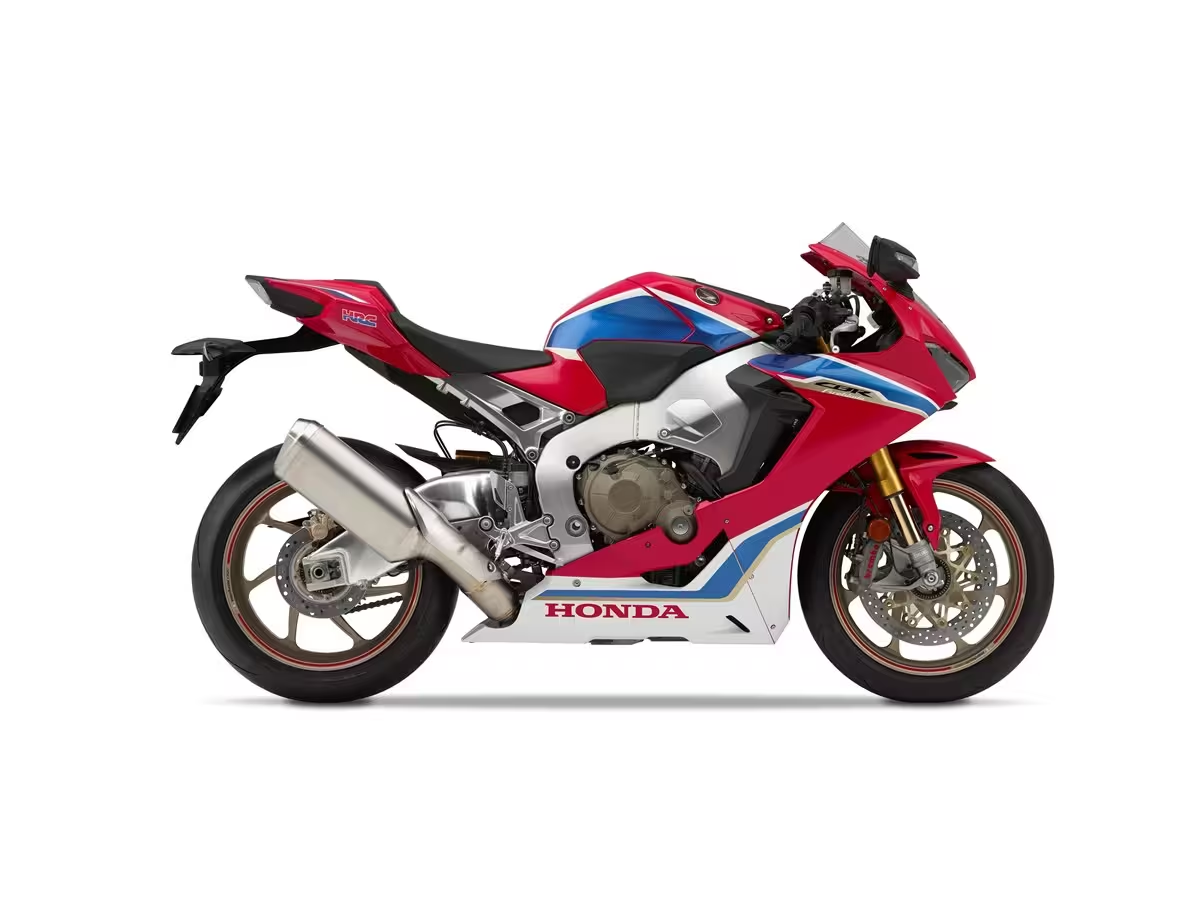
Visually, the SP2 is nothing short of striking. The styling is defined by an aggressive racing design that purposefully minimizes frontal area to cut through the wind with minimal drag. Every curve and angle of the aerodynamic fairings has been sculpted in a wind tunnel to improve high-speed stability and optimize airflow around the rider.
The aesthetic is heavily influenced by Honda’s racing pedigree, draped in the iconic HRC (Honda Racing Corporation) tri-color scheme of red, white, and blue, accented with gold striping and carbon fiber insert panels that distinguish it from the standard SP.
Beneath the striking bodywork lies a hollow die-cast twin-spar aluminum frame. The engineers managed to thin out the frame walls in specific areas to shave precious grams while simultaneously tuning the flex characteristics to provide better feedback at high lean angles. Furthermore, the SP2 features a first-in-class titanium fuel tank. Manufactured using an ultra-deep drawing process, this tank is significantly lighter than a standard steel tank and narrower between the knees, allowing the rider to tuck in tighter behind the windscreen for maximum aerodynamic efficiency.
Precision Chassis & Handling Characteristics
Power means very little if a motorcycle cannot navigate a corner effectively. Fortunately, the SP2 is built for absolute precision handling. The foundation of this agility is the previously mentioned twin-spar aluminum frame, which perfectly balances torsional rigidity with lateral flex to keep the chassis composed under immense stress.
However, the most significant handling upgrade specific to the SP2 comes in the form of its wheels. The motorcycle is equipped with ultra-lightweight, forged aluminum Marchesini wheels. These seven-spoke wheels dramatically reduce unsprung mass and rotational inertia. Consequently, the lighter wheels drastically improve agility and steering response, making it vastly easier to change direction through fast, sweeping chicanes on the track.
Moreover, the improved weight distribution centralizes the bike’s mass. By relocating heavier components and utilizing the lightweight titanium fuel tank, the SP2 feels incredibly flickable. Turn-in is telepathic; you merely look at the apex, and the bike intuitively drops into the corner, holding its line with surgical precision.
Premium Suspension & Braking Systems
To harness the intense capabilities of the chassis, the SP2 uses premium suspension and braking components that are effectively straight off a race bike. The suspension system is an Öhlins Electronic Control (Smart EC) setup, featuring a 43mm NIX30 inverted front fork and a TTX36 rear shock.
This semi-active suspension system constantly monitors the bike’s behavior and automatically adjusts the electronic damping in real-time. Whether you are braking heavily into a hairpin or accelerating out of a sweeping curve, the suspension adapts to provide maximum grip.
In the braking department, the SP2 relies on top-tier Brembo four-piston monobloc radial-mount calipers biting down on dual front discs. These features combined drastically improve cornering stability and outright stopping power. The initial bite from the Brembo brakes is fierce, yet highly progressive, giving the rider immense confidence to brake incredibly late into corners without unsettling the chassis.
Advanced Electronics & Rider Aids
Modern superbikes rely heavily on electronics, and the SP2 features one of the most sophisticated brains in the paddock. The core of this system is a 5-axis Inertial Measurement Unit (IMU) that constantly calculates the bike’s pitch, roll, and yaw to intervene only when absolutely necessary.
The highly responsive ride-by-wire throttle is mapped to multiple riding modes, allowing the rider to select pre-set configurations for power delivery, engine braking, and suspension stiffness. Key features of the electronic suite include:
- Traction Control (Honda Selectable Torque Control): Modulates power output to prevent rear-wheel slip during aggressive acceleration.
- Wheelie Control: Keeps the front wheel planted, ensuring all forward momentum is translated directly to the asphalt.
- Engine Braking Control: Adjustable levels of engine braking to suit rider preference on corner entry.
- Quickshifter with Auto-Blipper: Allows for clutchless upshifts and downshifts, shaving fractions of a second off lap times.
These systems work seamlessly together to help riders control the bike’s high power output safely, making the SP2 accessible for highly skilled riders while keeping them out of the gravel trap.
The Track-Focused Riding Experience
Describing what it feels like to ride the Honda CBR1000RR SP2 is best summarized in one word: visceral. From the moment you swing a leg over the saddle, it is abundantly clear that this is a weapon designed for the circuit. The aggressive riding position forces you into a racing tuck, with high rearsets and low clip-on handlebars that naturally position your weight over the front end.
Twisting the highly responsive throttle results in an immediate, roaring surge of power. Because of the lightweight internals, the engine spools up with terrifying speed. Yet, despite the violence of the acceleration, the chassis remains remarkably composed, demonstrating incredible stability at high speeds.
When you approach a corner and grab a handful of the brake lever, the strong braking performance from the Brembos sheds speed instantly, while the auto-blipper allows you to stomp down through the gearbox without upsetting the rear wheel. It is vital to explain that the SP2 is designed primarily for track performance rather than casual street riding. The stiff suspension and aggressive ergonomics will quickly become punishing on potholed city streets, but on the smooth asphalt of a race track, it feels like an absolute dream.
Fuel Economy & Long-Term Maintenance
While fuel efficiency is rarely the primary concern for superbike buyers, it is still a factor in overall ownership considerations. Because of its high-compression engine and performance tuning, fuel consumption hovers around a 48 mpg average under standard cruising conditions, though this number will plummet significantly during aggressive track use.
Superbikes typically require more maintenance than standard motorcycles, and a homologation special like the SP2 is no exception. Maintenance costs will be notably higher due to the premium nature of the components (such as Öhlins suspension seals and Brembo brake pads).
Service intervals for valve clearances are strictly enforced, and if the bike is subjected to frequent track days, fluid changes and tire replacements will become a regular, expensive habit. Furthermore, due to the high replacement cost of the carbon fiber panels and Marchesini wheels, insurance costs for the SP2 sit at the highest end of the premium spectrum.
Honda CBR1000RR SP2 vs Leading Competitors
In the elite liter-bike class, the SP2 faces incredibly stiff competition. To truly understand its place in the market, we must compare it with other flagship superbikes from rival manufacturers.
| Bike | Power | Top Speed |
| CBR1000RR SP2 | ~189 hp | ~186 mph |
| Yamaha R1M | ~200 hp | ~186 mph |
| BMW S1000RR | ~205 hp | ~188 mph |
| Ducati Panigale V4 | ~214 hp | ~190 mph |
When analyzing the differences in power, the SP2 produces slightly fewer peak ponies compared to the Ducati Panigale V4 and BMW S1000RR. However, Honda makes up for this deficit in handling and usability. The SP2’s chassis is arguably more forgiving and intuitive, allowing riders to utilize 100% of the available power, whereas the 214 horsepower of the Ducati can be overwhelmingly brutal.
In terms of technology, all these bikes feature top-tier IMU-based electronics, but the Yamaha R1M and SP2 share a deep focus on track-ready suspension telemetry. Finally, regarding price, the SP2’s limited production run makes it a premium, exclusive purchase, often sitting above the standard R1M or S1000RR in terms of sheer collector value.
Pros & Cons of the SP2
Before making any major purchasing decision, it helps to weigh the clear advantages against the inherent drawbacks of such an extreme machine.
Pros
- ✔ Extremely powerful engine with highly responsive power delivery
- ✔ Race-focused performance designed specifically for track dominance
- ✔ Premium suspension from Öhlins offering semi-active damping
- ✔ Lightweight Marchesini wheels drastically improve handling and agility
- ✔ Advanced electronics suite keeps the rider safe at the limit
Cons
- ✖ Expensive superbike with high maintenance and insurance costs
- ✖ Aggressive riding position is highly uncomfortable for street riding
- ✖ Not ideal for beginners or casual weekend commuters
Honda CBR1000RR SP2 Price & Market Availability
When discussing the Honda CBR1000RR SP2 price, exclusivity is the main factor. During its original launch in 2017, the retail price was set at roughly $23,500. While this was a steep premium over the standard Fireblade, the inclusion of Marchesini wheels, Öhlins electronic suspension, and the heavily modified race-ready engine justified the cost for serious racers.
Because of the incredibly limited production run (only 500 units worldwide over two years), market availability was—and remains—extremely scarce. Today, used market prices fluctuate wildly depending on the bike’s mileage and condition. Because SP2 models are much rarer than standard Fireblades, they are often sought by motorcycle collectors. A pristine, low-mileage SP2 can easily fetch prices near or even above its original MSRP on the enthusiast market.
Frequently Asked Questions (FAQ)
How fast is the Honda CBR1000RR SP2?
The Honda Fireblade SP2 top speed is electronically limited to approximately 186 mph (299 km/h), adhering to the gentlemen’s agreement among major motorcycle manufacturers. However, on the track, it reaches this speed with blistering ferocity.
What is the horsepower of the Fireblade SP2?
The CBR1000RR SP2 horsepower output sits at roughly 189 hp (141 kW) at 13,000 rpm. The engine was heavily modified from the base model to allow for high-lift cams and advanced tuning via HRC race kits.
Is the CBR1000RR SP2 good for track riding?
Absolutely. It was purpose-built for the track. The aggressive ergonomics, lightweight Marchesini wheels, and Öhlins semi-active suspension make it one of the most capable track day weapons ever produced by Honda.
What makes the SP2 different from the standard Fireblade?
The primary differences include a specialized cylinder head with larger intake and exhaust valves, distinct valve angles, lightweight forged Marchesini wheels, carbon fiber styling inserts, and exclusive electronic tuning parameters designed for racing.
Final Thoughts on the SP2
To summarize this Honda CBR1000RR SP2 review, this motorcycle is an absolute triumph of racing engineering. It is not simply a cosmetic upgrade to the standard model; it is a meticulously crafted homologation special that brings WSBK-level technology to the consumer market.
The SP2 offers race-level performance that rewards skilled riders with razor-sharp handling and explosive power. The inclusion of premium suspension components ensures that the bike remains planted and composed under extreme braking and cornering loads. Furthermore, the advanced electronics suite acts as an invisible safety net, allowing you to push your personal limits with confidence.
While the high price tag and aggressive nature make it unsuitable for casual street riding, we can confidently conclude that the SP2 is one of Honda’s most track-focused Fireblade models ever produced. It remains a coveted prize for collectors and a formidable tool for racers.