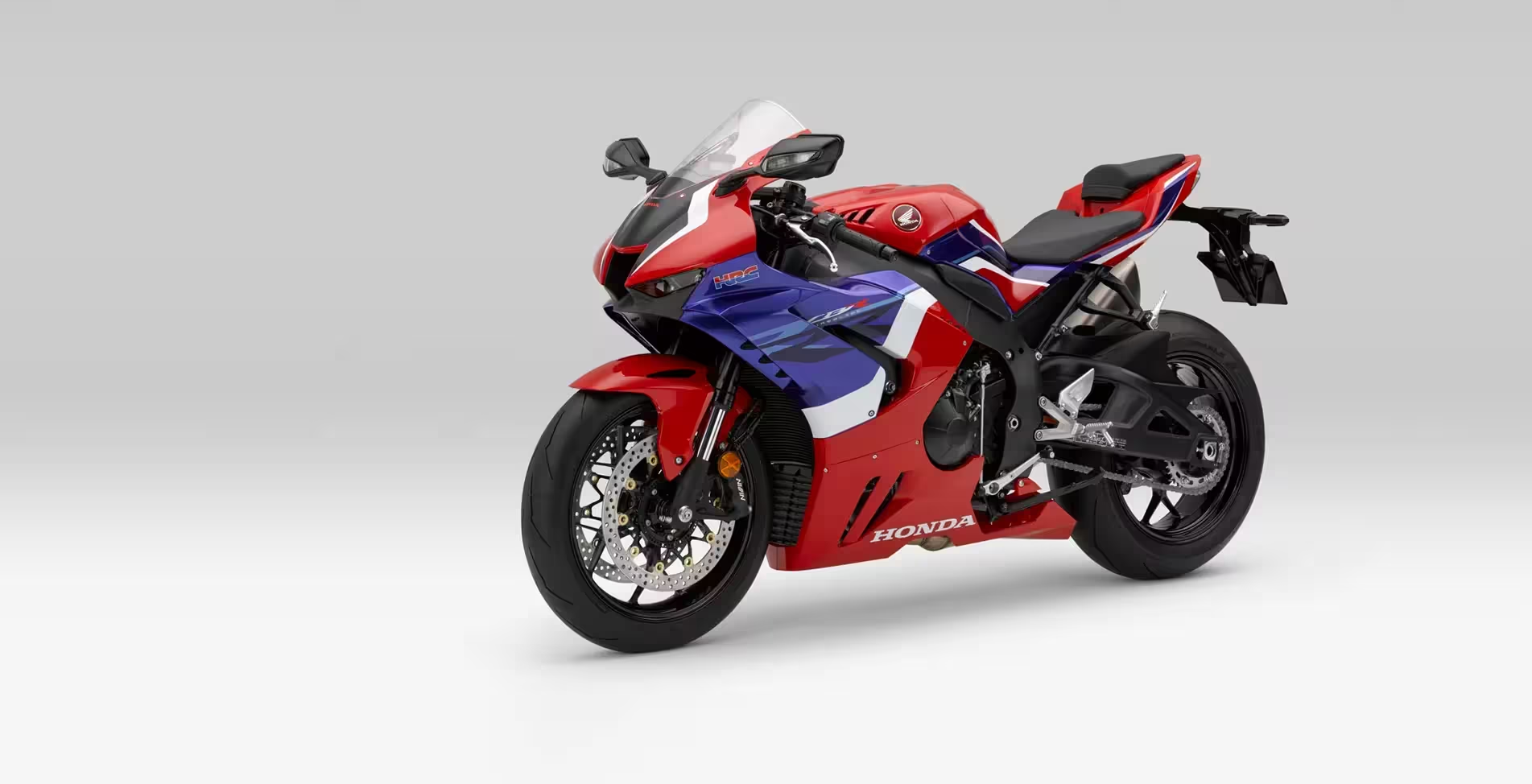
Honda CBR1000RR Review 2026 The Ultimate Fireblade Experience

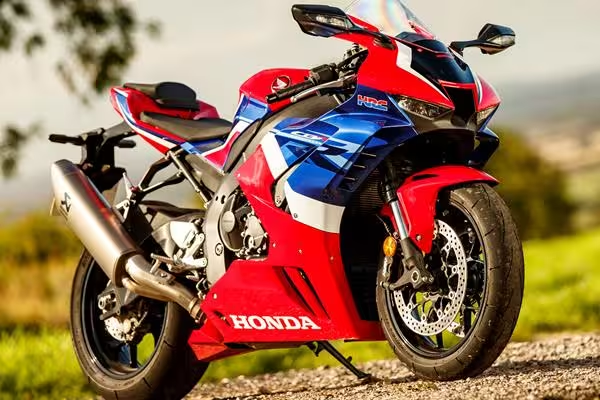
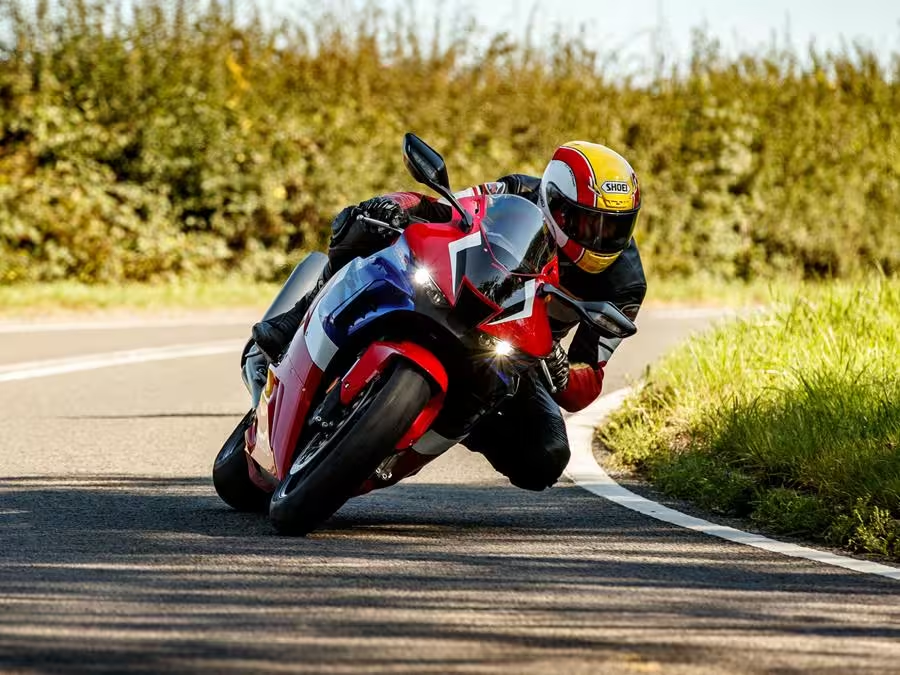
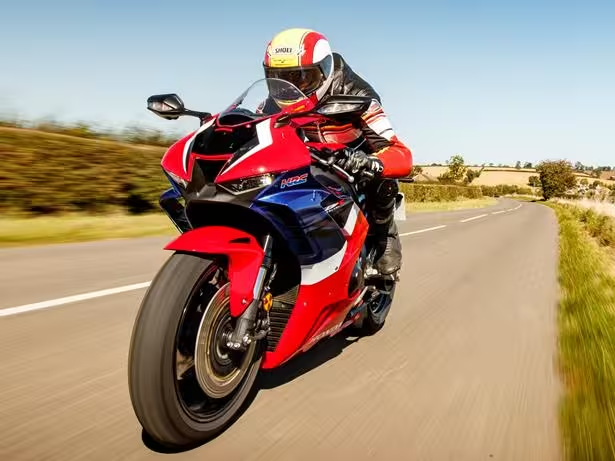
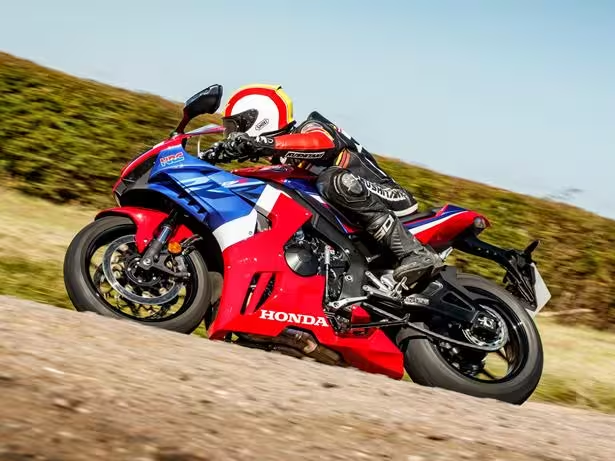
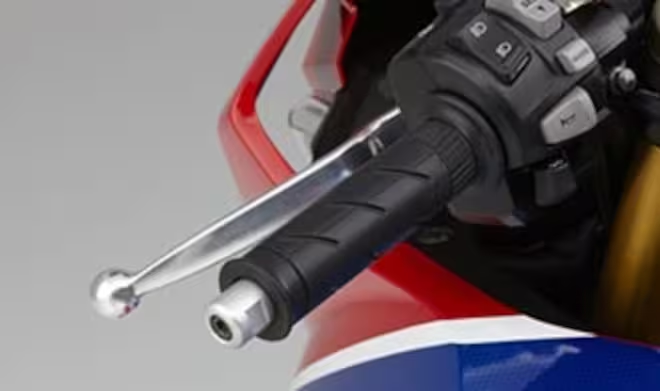
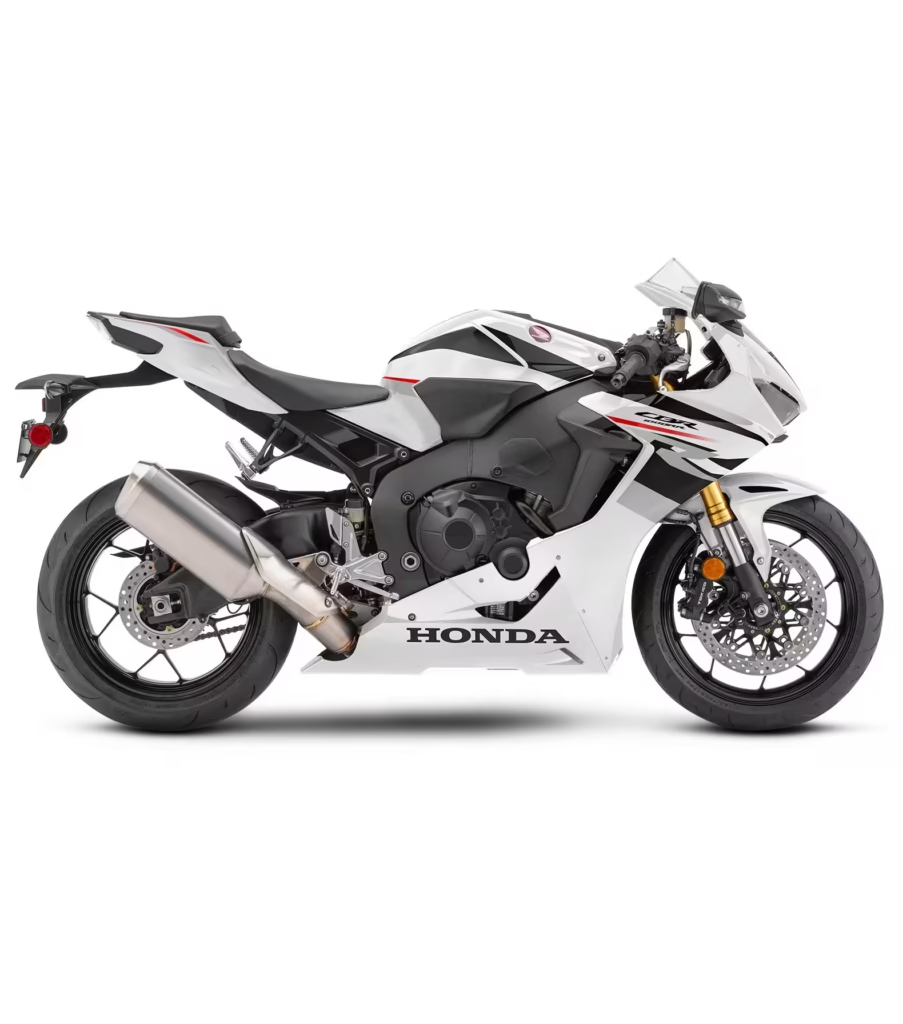
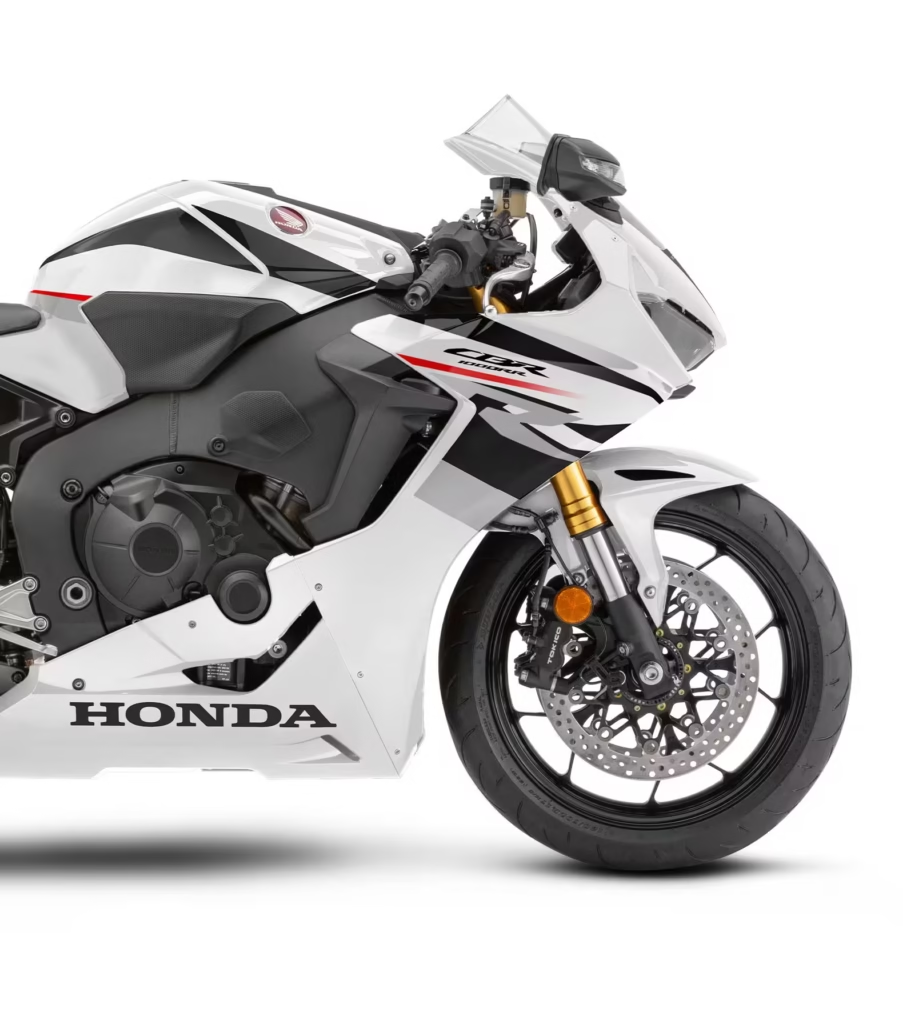
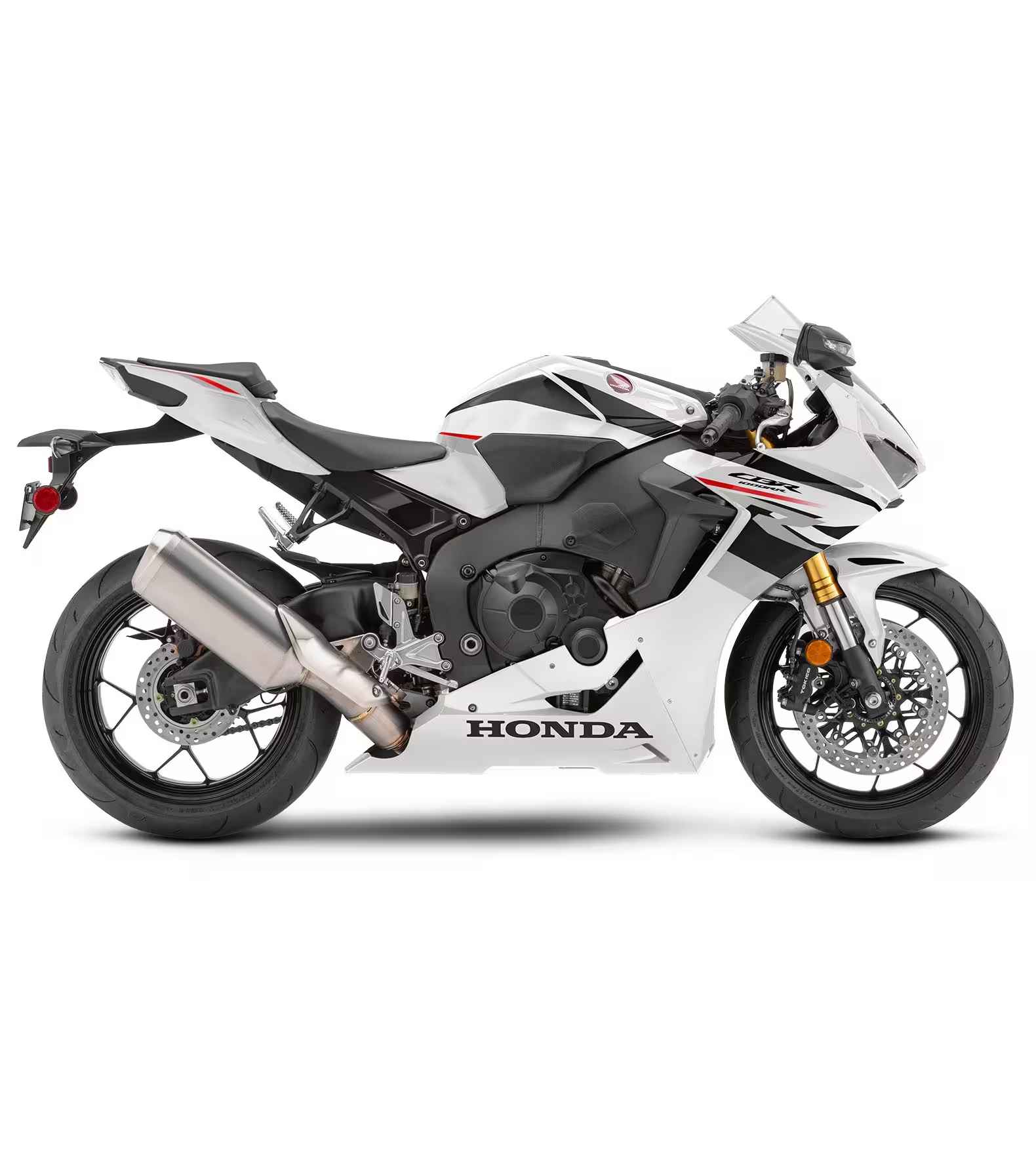
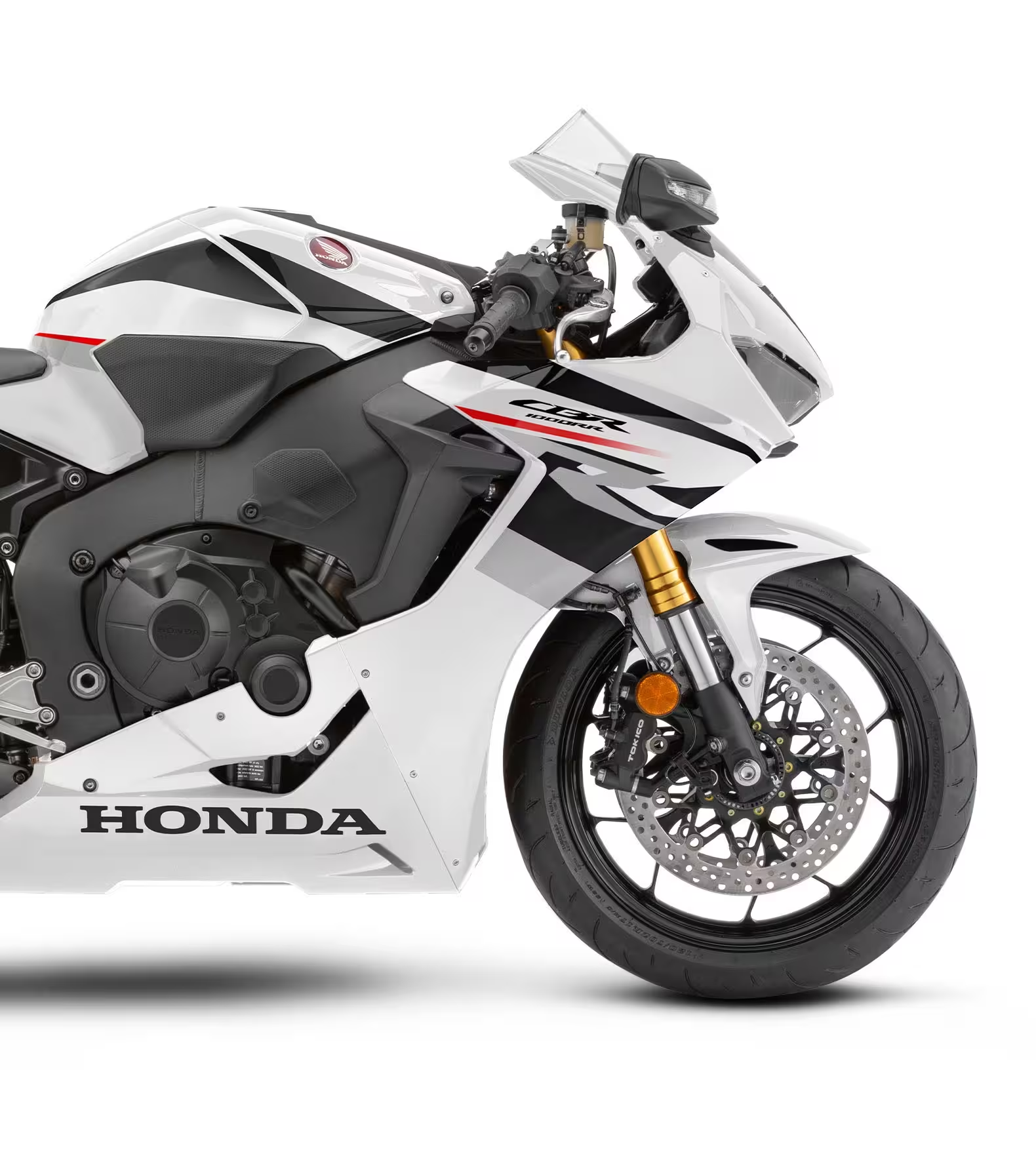
Welcome to our comprehensive Honda CBR1000RR review, where we dissect the latest iteration of one of the most legendary motorcycles ever produced. For decades, the “Fireblade” nameplate has commanded respect on both city streets and professional racing circuits across the USA and Europe. In 2026, the stakes are higher than ever. With manufacturers pushing the boundaries of engineering, the superbike segment is a fiercely competitive battleground.
Is the newest Fireblade just a beautiful machine, or does it possess the razor-sharp track capabilities to dethrone its European and Japanese rivals? Whether you are a dedicated track day rider, an unrelenting speed lover, or simply a motorcycle enthusiast dreaming of your next garage addition, this deep dive will give you everything you need to know. We will cover the cutting-edge CBR1000RR specs and performance, the electronics suite, and the raw, unadulterated riding experience. Let’s dive in.
Honda CBR 1000 RR Review
Overview & Key Highlights of the Fireblade
To truly understand this motorcycle, we must first look at its pedigree. Since its original launch in 1992, the Fireblade has undergone a massive evolution, transitioning from a lightweight street-brawler to a MotoGP-derived track weapon. Positioned at the very top of Honda’s sportbike lineup, the modern CBR1000RR-R Fireblade SP represents the pinnacle of Honda Racing Corporation (HRC) engineering.
Furthermore, this machine does not exist in a vacuum. It goes head-to-head with some of the most formidable machines on the planet. Its main competitors include the legendary Yamaha YZF-R1, the aggressive Kawasaki Ninja ZX-10R, and the technologically dominant BMW S1000RR.
Before we get into the granular details, here is a quick bullet summary of what you are dealing with:
- Engine: 999cc liquid-cooled inline four-cylinder
- Horsepower: 214+ HP (Euro spec) / ~186 HP (US spec due to noise/emissions mapping)
- Top Speed: 186 mph (299 km/h – electronically limited)
- Price Range: $28,999 (SP version MSRP in the USA)
Engine & Performance: Unleashing the Beast
When discussing the best superbike 1000cc options on the market, the powerplant is where the conversation begins and ends. The heart of the 2026 Fireblade is a masterclass in mechanical engineering. It features a compact 999cc liquid-cooled, inline-4 engine with a bore and stroke of 81.0mm x 48.5mm—identical to the RC213V MotoGP bike.
Consequently, the horsepower and torque figures are staggering. In Europe, the bike pushes a massive 215 horsepower at 14,000 RPM, with 83.3 lb-ft of torque at 12,000 RPM. Note for US riders: Due to strict EPA noise and emissions regulations, the stock US model is slightly detuned out of the crate, but a quick ECU flash or HRC racing kit unleashes its true, unbridled potential.
Acceleration and Top Speed
The acceleration on this machine is nothing short of violent. The 0–100 km/h (0-62 mph) sprint is decimated in just under 2.9 seconds. Furthermore, the CBR1000RR top speed is electronically governed at 299 km/h (186 mph), a standard gentlemen’s agreement among top motorcycle manufacturers. However, it reaches that limiter with a ferocious urgency that leaves you breathless.
Throttle Response and Power Delivery
Thanks to Honda’s Two-Motor Throttle-By-Wire system (split throttle bodies), the power delivery is remarkably refined. This system allows two cylinders to operate independently from the other two, smoothing out the initial throttle bite and offering superior engine-braking control.
At low RPMs, the bike is surprisingly docile. However, once you cross the 7,000 RPM threshold, the Akrapovič titanium exhaust valve opens, and the bike transforms. At high RPM, it feels like a genuine race bike—aggressive, screaming, and endlessly pulling toward the redline. On the track, this translates to blistering corner-exit speeds; on the street, it requires a steady, disciplined right wrist.
Technology & Electronics: The Digital Brain
Modern superbikes are heavily reliant on electronics, and Honda has spared no expense here. The Fireblade is essentially a supercomputer on two wheels, governed by a six-axis Inertial Measurement Unit (IMU).
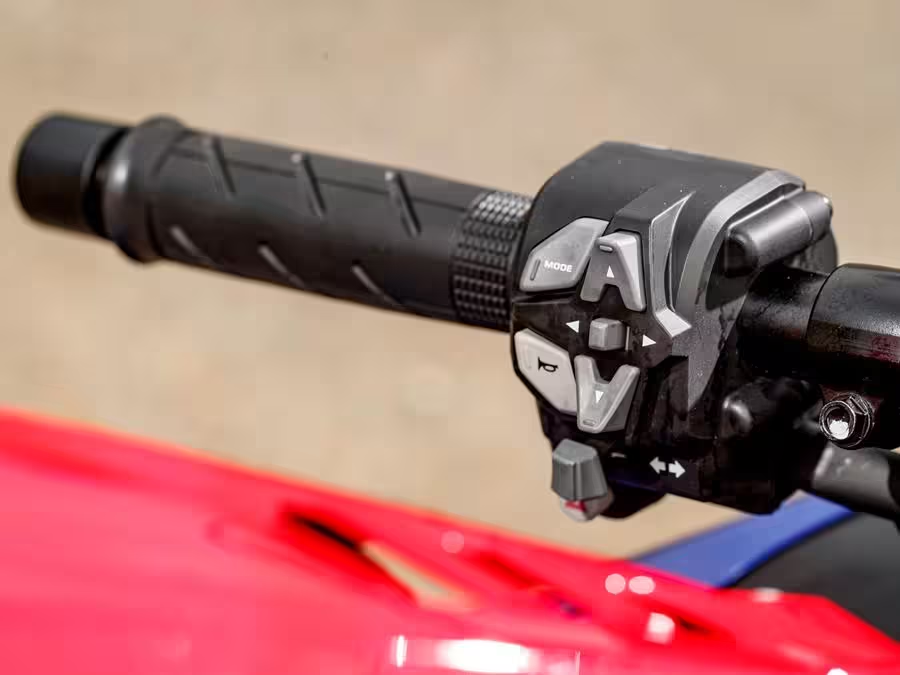
To begin with, the Ride-by-Wire system is flawless, offering multiple riding modes that allow you to tailor the bike’s behavior to your exact environment. The electronics package includes:
- Honda Selectable Torque Control (HSTC): 9 levels of highly refined traction control.
- Wheelie Control: Keeps the front wheel planted under hard acceleration without abruptly cutting power.
- Launch Control: Holds engine RPMs steady for perfect race starts.
- Quick Shifter: Standard on the SP, offering buttery-smooth clutchless upshifts and downshifts.
In contrast to older, more intrusive systems, the 2026 Fireblade’s electronics work in the background, subtly stepping in to keep you safe without ruining the fun. When compared to the BMW S1000RR, Honda’s interface takes a slightly more minimalist approach, but the underlying intervention is just as sophisticated.
Design & Aerodynamics: Form Follows Function
Honda’s design philosophy for the current generation is strictly MotoGP-inspired. The aggressive styling is not just for show; every curve and crease serves an aerodynamic purpose.
The standout feature is undeniably the integrated winglets. Housed within the side fairings, these winglets generate significant downforce at high speeds, reducing the tendency to wheelie and keeping the front tire securely pressed onto the tarmac. This allows you to open the throttle earlier and harder.
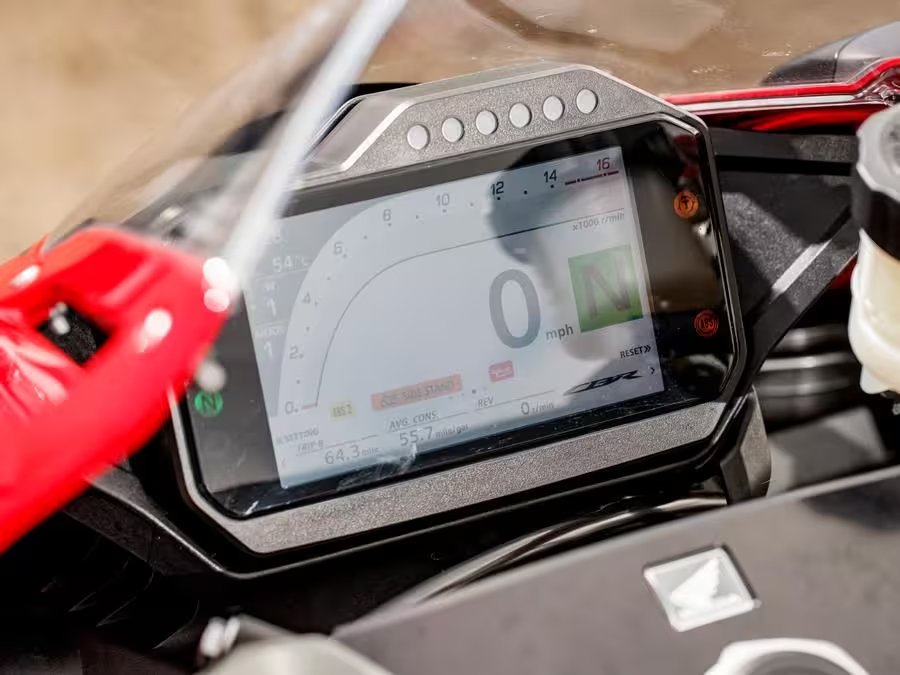
Moreover, the build quality is unmistakably Honda—flawless paint (especially the iconic Grand Prix Red), tight panel gaps, and premium materials throughout. The bike features brilliant all-around LED lighting and a crisp, full-color 5-inch TFT instrument cluster that is easily readable even in direct sunlight.
Handling & Ride Quality: Precision Instrument
Underneath the striking bodywork lies a lightweight aluminum twin-spar frame. Honda engineers meticulously tuned the rigidity of this frame to offer maximum feedback to the rider. The weight distribution is perfectly balanced, pulling the mass closer to the center of gravity.
As a result, the cornering ability of the Fireblade is telepathic. You simply look where you want to go, and the bike complies.
Suspension Setup
If you opt for the SP variant, you are treated to the magnificent Öhlins second-generation Smart EC suspension. This features an electronically controlled 43mm NPX fork up front and a TTX36 shock in the rear.
When discussing track handling vs city riding, this electronic suspension is a game-changer. On the track, you can stiffen the damping for razor-sharp precision. Conversely, for your ride home, you can dive into the TFT menu, soften the suspension, and enjoy a much higher comfort level than you would expect from a purebred sportbike.
Braking & Safety: Stopping Power
Going fast is only half the equation; you also need to stop. The front wheel is equipped with massive dual 330mm disc brakes gripped by top-tier radial-mounted Brembo Stylema R four-piston calipers. The rear features a single 220mm disc.
The braking performance is phenomenal. During emergency braking tests, the bite is strong, progressive, and confidence-inspiring. The system is backed by a state-of-the-art Cornering ABS system. This means that even if you grab a handful of brake while leaned over mid-corner, the IMU will modulate the braking pressure to prevent the tires from locking and washing out. The high-speed stability under heavy braking is rock solid, with zero chassis wobble.
Fuel Efficiency: The Practical Side
Let’s discuss Fireblade mileage. While nobody buys a 200+ horsepower superbike to save money on gas, fuel efficiency is still a practical consideration, especially for street riders in the US and Europe.
Real-world mileage typically sits around 35 MPG (roughly 15 km/l), though aggressive track riding will see that number plummet. The fuel tank capacity is 4.4 gallons (16.5 liters), which gives you a realistic touring range of about 140 to 150 miles before the fuel light starts flashing.
Honda Fireblade Price & Variants
When it comes to pricing, Honda offers the bike in different trims depending on your region. The main distinction is between the standard model and the highly sought-after SP version.
In the USA, the 2026 Honda CBR1000RR-R Fireblade SP has an MSRP of $28,999 (plus destination charges). For European buyers, prices vary slightly by country but generally hover around the €27,000 to €29,000 mark.
Scannable Pros & Cons
To summarize the experience thus far, here is a quick look at the strengths and weaknesses of the bike.
Pros:
- Incredibly powerful, high-revving inline-4 engine.
- Advanced, highly customizable electronics package.
- Track-ready performance right off the showroom floor.
- Exceptional Öhlins electronic suspension (SP model).
Cons:
- Very expensive, especially the SP variant.
- Aggressive ergonomics are not ideal for touring.
- Not beginner-friendly in the slightest.
- Restricted power output on US models requires aftermarket tuning for full potential.
Competitor Comparison Table
How does the Fireblade stack up against its fierce rivals? Let’s take a look.
| Feature | Honda CBR1000RR-R SP | Yamaha YZF-R1M | Kawasaki Ninja ZX-10RR |
| Power (Claimed) | 215 HP (Euro) | 200 HP | 204 HP |
| Engine Type | 999cc Inline-4 | 998cc CP4 Inline-4 | 998cc Inline-4 |
| Base Price (Est) | $28,999 | $27,399 | $30,499 |
| Suspension | Öhlins Smart EC | Öhlins Electronic | Showa BFF (Manual) |
| Reliability | Excellent | Very Good | Very Good |
Ultimately, while the Yamaha offers that unique crossplane sound and the Kawasaki boasts proven World Superbike championship pedigree, the Honda strikes an incredible balance of premium build quality, stratospheric peak power, and accessible handling.
Read More:-
- Honda CBR1000RR SP2 Review (2026): Specs, Top Speed, Price & Performance
- Honda CBR1000RR SP2 Review: An In-Depth Look at the Track-Focused Superbike
Who Should Buy This Bike?
This motorcycle is built for a very specific target audience. It is designed for:
- Track Riders: If you spend your weekends at Laguna Seca, Silverstone, or Portimão, this bike will help you shave seconds off your lap times.
- Experienced Bikers: Riders with years of experience who know how to respect and manage 200+ horsepower.
- Speed Enthusiasts: Those who want the absolute pinnacle of internal combustion performance.
Who should NOT buy it? Beginners. Under no circumstances is this a starter bike. Its aggressive power delivery and razor-sharp brakes will punish novice mistakes instantly. Start on a CBR500R or CBR650R instead.
Real-World Riding Experience
While it is a track monster, many buyers will spend 90% of their time on the street. Therefore, the real-world riding experience matters.
City riding presents some challenges. The aggressive riding position puts weight on your wrists, and navigating stop-and-go traffic can be tiring. Furthermore, heat management is an issue; that massive 1000cc engine generates a lot of thermal energy, which will toast your legs at a red light on a hot summer day.
However, once you merge onto the highway, the bike makes sense. Highway performance is sublime. The aero winglets and windscreen punch a clean hole through the air, and passing traffic requires nothing more than a millimeter of throttle twist. While comfort on long rides is subjective, the electronic suspension’s ability to soak up highway expansion joints makes it vastly superior to older, statically sprung superbikes.
Maintenance & Reliability Reputation
Honda is practically synonymous with reliability. Even though this is a highly stressed, high-performance engine, if you adhere strictly to the maintenance schedule, it will run flawlessly.
Service costs are generally on par with other Japanese manufacturers, meaning it will be cheaper to maintain than Italian counterparts like Ducati or Aprilia. Spare parts availability is generally excellent across the USA and Europe, though specialized SP parts (like the Öhlins suspension components or Brembo brakes) will carry a premium price tag.
Final Verdict
So, is it worth buying in 2026? Absolutely.
Our Honda CBR1000RR review concludes that the Fireblade SP is a monumental achievement in motorcycle engineering. It perfectly blends terrifying speed with angelic handling and electronic safety nets. It is best suited for the purist who wants a premium, flawlessly built track weapon that can still be ridden to the local coffee shop on a Sunday morning.
Ready to experience the thrill yourself? Head down to your local Honda Powersports dealer to schedule a test ride, or drop a comment below letting us know which 1000cc superbike you’d choose for your dream garage!
Disclaimer: All specs and pricing mentioned in this Honda CBR1000RR review are based on the latest 2025/2026 manufacturer data for the USA and European markets. Dealer markups and local taxes may apply.
Frequently Asked Questions (FAQ)
1. Is the Honda CBR1000RR good for beginners?
No. The Fireblade is a highly advanced, 200+ horsepower machine designed for experienced riders and track use. Beginners should look at lower-displacement options like the Honda CBR500R to learn the fundamentals of riding safely.
2. What is the CBR1000RR top speed?
The top speed of the Fireblade is electronically limited to 299 km/h (186 mph). However, without the limiter and with the right track gearing, the bike is aerodynamically and mechanically capable of exceeding 200 mph.
3. How much horsepower does the Fireblade have?
The European specification of the 2026 CBR1000RR-R Fireblade SP produces a claimed 215 horsepower at 14,000 RPM. US models are slightly restricted from the factory due to emissions but can be easily tuned to reach the same figures.
4. Is it better than the Yamaha YZF-R1?
“Better” is subjective. The Honda boasts higher peak horsepower, a more advanced TFT dash, and newer electronic suspension tech. However, the Yamaha R1 has a legendary crossplane engine that offers phenomenal midrange torque and a unique exhaust note. Both are incredible machines; the Honda feels slightly more modern and aggressive on the top end.
5. What is the difference between the standard CBR1000RR and the SP?
The SP (Sport Production) variant upgrades the standard bike with premium components, most notably the Öhlins Smart EC electronic suspension, Brembo Stylema R front brake calipers, and a standard quick-shifter.
Explore EVs, Cars & Bikes:-