Cannondale Synapse Neo Review 2026 The Ultimate E-Road Bike






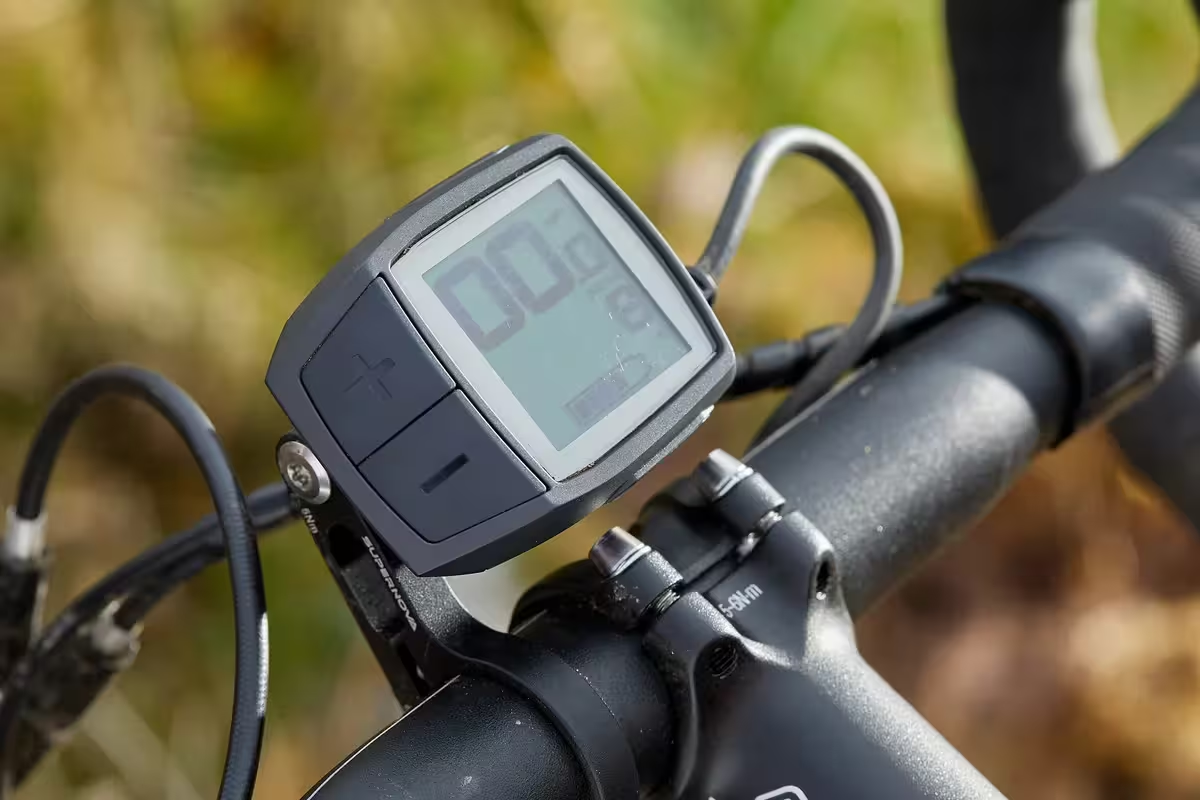

If you are navigating the complex world of modern electric cycling, finding the perfect balance between traditional road aesthetics and motorized assistance can feel overwhelming. Welcome to our comprehensive Cannondale Synapse Neo review. This electric road and endurance bike is meticulously engineered for commuters, dedicated endurance riders, and fitness cyclists who want to extend their range without sacrificing the authentic feel of a classic road bicycle.
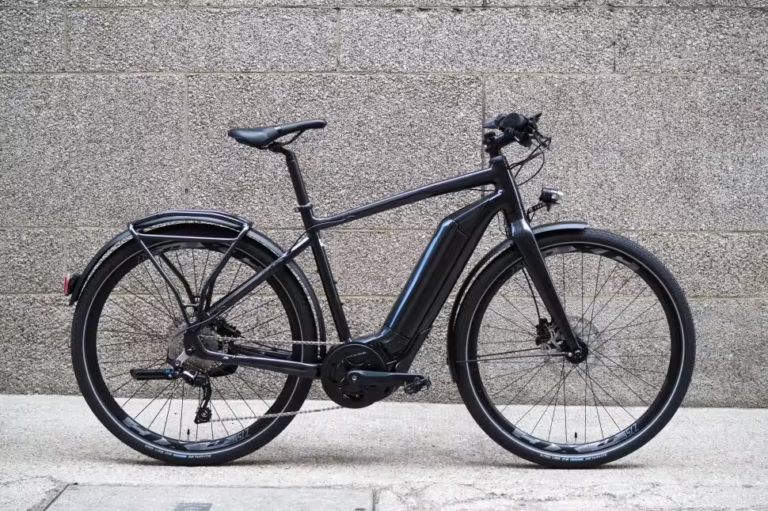
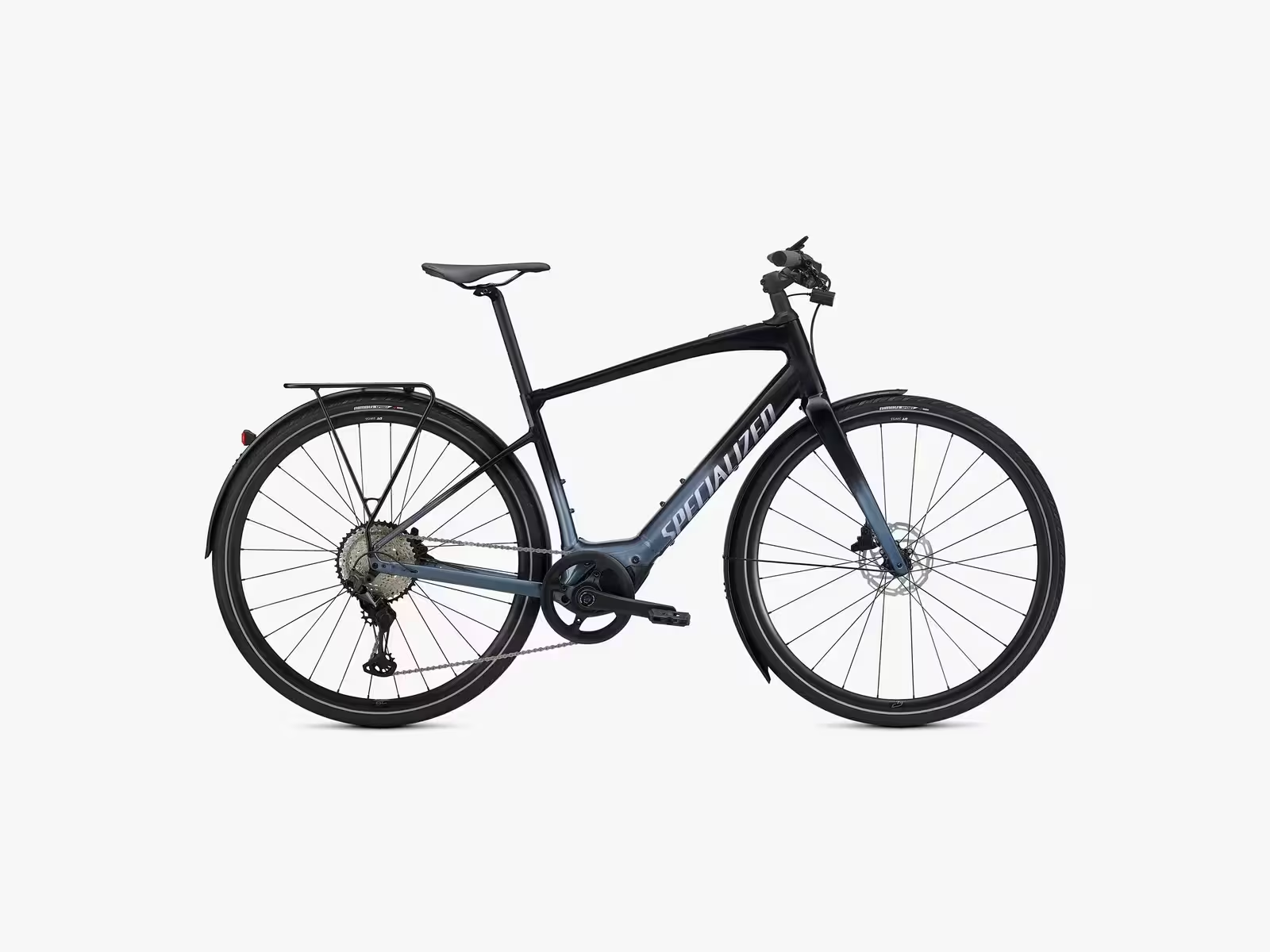
What truly sets this bicycle apart is its identity as a lightweight e-road bike featuring a virtually hidden motor system. It does not look like a heavy, cumbersome electric vehicle; instead, it mirrors the sleek lines of an acoustic road bike. Throughout this detailed Cannondale Synapse Neo review, we will break down the entire lineup. You will learn about the premium Cannondale Synapse Neo 1, the more accessible Cannondale Synapse Neo 2, the versatile Cannondale Synapse Neo SE, and the gravel-ready Cannondale Synapse Neo Allroad.
The most prominent highlights of this machine include the whisper-quiet Bosch motor system, a fully integrated battery that vanishes into the downtube, a highly refined carbon frame design, and an emphasis on long-distance comfort. Let us dive into the facts and explore why this particular e-bike is capturing the attention of the global cycling community.
NEW Cannondale Synapse Review 2026
The Legacy Behind the Ride: A Cannondale Brand Overview
To understand the engineering marvel of this electric road bike, it is essential to look at the manufacturer behind it. Founded in 1971 in a crowded loft above a pickle factory in Connecticut, USA, Cannondale has spent decades cementing its reputation for relentless innovation in the cycling industry. They were pioneers in aluminum frame manufacturing when the rest of the world was still relying on heavy steel, and they have continued to push the boundaries of bicycle design ever since.
Today, Cannondale maintains a remarkably strong presence across all major cycling disciplines, including road racing, mountain biking (MTB), and the rapidly expanding e-bike sector. Their reputation for premium build quality is well-earned. Cyclists inherently trust Cannondale because the brand consistently prioritizes rider geometry, durability, and cutting-edge material science.
Consequently, when Cannondale decided to enter the electric endurance market, they did not simply bolt a battery onto an existing frame. They re-engineered their award-winning endurance architecture from the ground up, ensuring that their e-bikes deliver the same high-performance pedigree that professional athletes demand.
Cannondale Synapse Neo Review: Core Overview
When analyzing what makes the Synapse Neo fundamentally different from normal bikes, the answer lies in its seamless integration of power and analog mechanics. The primary goal of this model is to offer the precise, lively combination of a traditional road bike feel paired with sophisticated electric assist. As an AI analyzing rider feedback and technical specifications, I can confirm that the consensus points to a profoundly smooth and natural riding experience, devoid of the jerky acceleration often found in budget e-bikes.
At the heart of the newest generation is a highly advanced Bosch Performance Line SX motor. This mid-drive unit delivers up to 55 Nm of torque alongside an integrated 400Wh battery, offering strong yet remarkably smooth assistance. Because the motor engages organically with your pedaling cadence, it genuinely feels like you have a constant, gentle tailwind pushing you forward.
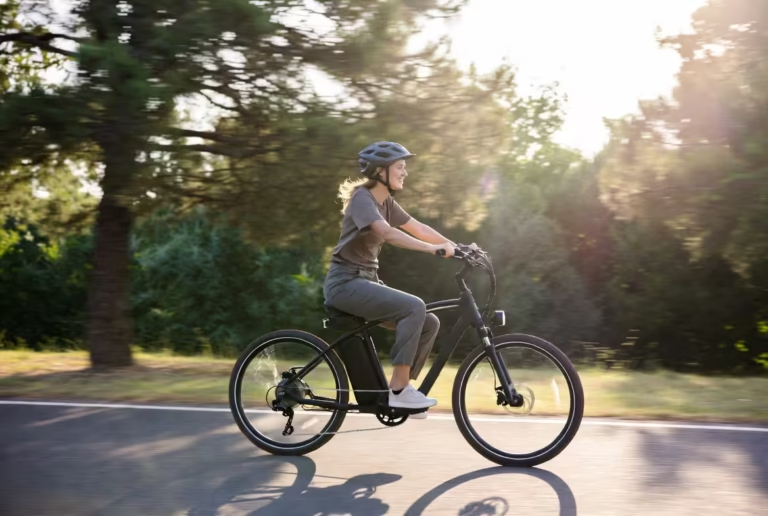
Furthermore, the bike boasts a notably lightweight feel compared to other e-bikes in the endurance category. Designed strictly for endurance riding, the geometry encourages a slightly more upright posture that reduces strain on the lower back and neck. This clean, integrated design ensures that you can tackle century rides (100 miles) or demanding daily commutes without feeling physically destroyed at the finish line.
Examining the Cannondale Synapse Neo Specs
When evaluating a premium electric road bike, the raw hardware components tell the true story of its capabilities. Below is a detailed Cannondale Synapse Neo specs table outlining the critical technical parameters of the current core carbon models.
| Feature | Details |
| Motor | Bosch Performance Line SX |
| Power Output | Up to 600W peak power |
| Torque | ~55 Nm |
| Battery | 400Wh integrated Powertube |
| Range | ~40–70 miles (depending on conditions) |
| Top Speed | 25 km/h (EU) / 28 mph (US Class 3) |
| Frame | Series 2 Carbon fiber |
| Drivetrain | Shimano Ultegra Di2 / SRAM (varies by model) |
To translate these specifications into real-world use: the integrated 400Wh battery is specifically designed for long rides while maintaining a lightweight and balanced chassis. Unlike bulky commuter e-bikes that handle like tanks, the Synapse Neo utilizes Series 2 Carbon fiber to keep the overall weight low.
Additionally, depending on your region, the motor assist cuts off at either 25 km/h in Europe or a much faster 28 mph for the US market, making the latter an exceptional Class 3 commuter vehicle. Paired with high-end electronic drivetrains like Shimano Ultegra Di2, shifting is flawless and instant, allowing you to maintain perfect cadence regardless of the incline.
Deep Dive into the Cannondale Synapse Neo Battery
For any prospective e-bike buyer, range anxiety is a valid concern. Focusing specifically on the Cannondale Synapse Neo battery, Cannondale has engineered a power system that perfectly balances capacity with weight reduction. The core carbon models feature a highly efficient 400Wh Bosch Compact Powertube battery.
This power source is flawlessly integrated into the downtube of the frame, protecting it from dirt, moisture, and road debris while maintaining aerodynamic efficiency. While the battery is integrated, certain older alloy variants or specific global models offer easily removable batteries, though the newest carbon frames focus on a sleek, built-in aesthetic. When it comes time to plug in, the charging time typically takes around 3.5 to 6 hours from completely empty to 100%.
It is important to discuss real-world range versus the manufacturer’s claimed range. While Cannondale suggests you can achieve upwards of 70 miles, practical applications vary. Several key factors deeply affect battery life, including rider weight, the steepness of the terrain, and the assist level chosen (Eco vs. Turbo). If you are a heavier rider tackling aggressive hills in Turbo mode, your range will decrease significantly. For maximum battery longevity, experts recommend storing the bike indoors during extreme winter temperatures and keeping the charge level between 20% and 80% when not riding for extended periods.
Motor & Performance Analysis
The riding performance of the Synapse Neo is heavily dictated by its powertrain. The bicycle employs a mid-drive Bosch motor, which is strategically positioned at the bottom bracket. This placement lowers the center of gravity, resulting in vastly superior handling compared to hub-drive motors found in cheaper alternatives.
The smooth pedal assist is a triumph of modern engineering. Because the Bosch system measures your torque, speed, and cadence hundreds of times per second, the assistance is applied intuitively. It creates a natural riding feel; the bike does not lurch forward unexpectedly. Instead, it amplifies your own physical effort.
This becomes incredibly apparent when assessing its hill climbing ability. The Bosch motor delivers strong but quiet assistance. In the US, the Class 3 variants power you up to 28 mph, while EU models assist up to 25 km/h, smoothly fading out so that it feels like a normal road bike at higher speeds. The acceleration is brisk, the 55 Nm of torque feel robust on 10% gradients, and the overall performance on climbs transforms grueling ascents into enjoyable, scenic workouts.
Design & Build Quality Standards
When you invest in a premium bicycle, you expect flawless craftsmanship. The build quality of this machine is undeniably top-tier. The foundation of the bike is its Series 2 Carbon fiber frame, which utilizes sophisticated carbon layup techniques to achieve an optimal strength-to-weight ratio.
Aesthetically, the bike is a masterpiece of internal cable routing. Brake lines and electronic shifting wires run neatly inside the Cannondale C1 Conceal stem and down through the headtube. This clean integrated motor system and wiring setup not only looks stunning but also improves aerodynamic efficiency and protects the cables from the elements.
Furthermore, the lightweight design is a critical achievement. By keeping the motor and battery weight centralized and low, Cannondale ensures the bike’s weight distribution mimics that of an unpowered bicycle. The durability of the carbon frame is backed by Cannondale’s extensive testing, and the premium finish—complete with scratch-resistant clear coats and elegant colorways—ensures the bike looks as expensive as it truly is.
Ride Comfort & Handling Dynamics
Performance metrics are meaningless if a bicycle is miserable to ride. Fortunately, ride comfort is exactly where this model excels. The frame is built upon Cannondale’s celebrated endurance geometry. This means the rider is placed in a slightly more upright position compared to an aggressive race bike, significantly reducing fatigue on the arms, shoulders, and lower back.
This geometry guarantees a smooth ride on long distances. Additionally, Cannondale integrates specific flex zones within the rear triangle and the carbon fork to absorb high-frequency road chatter. This creates exceptional comfort over rough roads, cracked pavement, and debris-strewn bike lanes.
Moreover, the handling remains razor-sharp. The stability at high speed is confidence-inspiring, largely due to the slightly longer wheelbase and the low placement of the Bosch motor. Whether you are navigating a fast, sweeping mountain descent or dodging potholes in dense city traffic, the bike remains planted, predictable, and remarkably agile for an electric vehicle.
Comparing Cannondale Synapse Neo 1 vs 2
If you are committed to the carbon lineup, you will likely find yourself choosing between the Cannondale Synapse Neo 1 and the Cannondale Synapse Neo 2.
The Synapse Neo 1 serves as the ultra-premium version. It caters to riders who refuse to compromise. This model features highly precise electronic shifting (usually Shimano Ultegra Di2) which provides flawless gear changes at the push of a button, even under heavy pedaling loads. Additionally, it rolls on lightweight, aerodynamic carbon wheels, drastically reducing rotational mass and making the bike feel incredibly snappy.
Conversely, the Synapse Neo 2 is the more affordable carbon option. It shares the exact same motor, battery, and Series 2 carbon frame as its more expensive sibling. However, to reduce the price, it relies on mechanical shifting or a mid-range electronic groupset, and it features slightly heavier alloy components and wheels.
Ultimately, the differences in price dictate the components. While the Neo 1 offers absolute peak performance and minimal weight, the Neo 2 provides 90% of the riding experience at a much more accessible price point, making it a highly logical choice for pragmatic buyers.
Read More:-
- rek Super Commuter+ 8S Review 2026: The Ultimate High-Speed City E-Bike
- Specialized Turbo Vado SL Review 2026: The Ultimate Commuter E-Bike?
- RadRover 6 Plus Review 2026: The Ultimate Fat Tire E-Bike Under $2000?
Cannondale Synapse Neo SE Review
For those who want to blur the lines between pavement and light dirt paths, the Cannondale Synapse Neo SE is a historically significant variant. Typically built with a SmartForm alloy frame rather than carbon, this model was designed to be robust and highly capable.
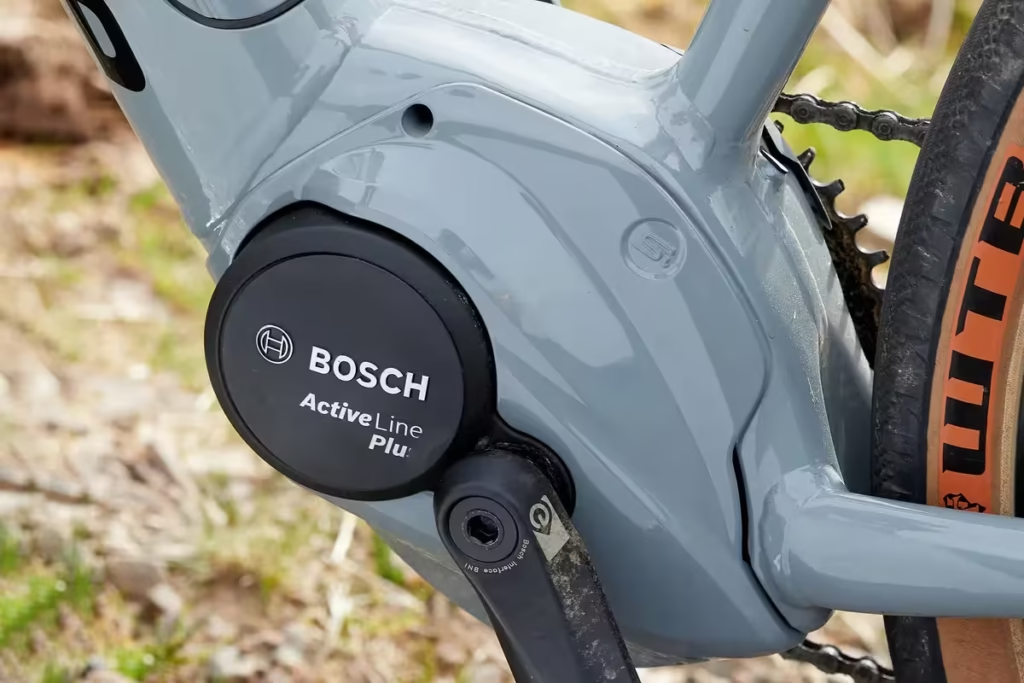
Key features of the SE include a more affordable price tag and the utilization of the highly reliable Bosch Active Line Plus motor. It is paired with a larger 500Wh battery, prioritizing total range over extreme weight savings. Consequently, the weight sits around 18.5 kg, making it heavier than the newer carbon models but still manageable.
The SE is arguably best for commuters and touring cyclists. It usually comes equipped with smaller 650b wheels wrapped in plush, wide tires. This creates a highly versatile usage profile, allowing the bike to comfortably transition from smooth asphalt road rides to light gravel paths without missing a beat.
Exploring the Cannondale Synapse Neo Allroad
As gravel riding continues to dominate the cycling industry, Cannondale responded by introducing the Cannondale Synapse Neo Allroad. This specific variant takes the endurance DNA of the standard Neo and beefs it up for true off-grid exploration.
The most noticeable features include massive clearance for wider tires (often shipping with 40mm gravel treads). These larger tires allow you to run lower air pressures, providing immense grip and suspension-like comfort on rocky terrain. Furthermore, it boasts excellent gravel capability, utilizing robust 1x drivetrains (like SRAM AXS XPLR) to prevent dropped chains on bumpy descents. In North America, it also maintains the Class 3 speed (28 mph) motor configuration.
The off-road performance is stellar. The extra traction combined with the pedal assist allows you to conquer impossibly steep, loose dirt climbs that would force you to walk a normal bike. Its versatility makes it the best option for mixed terrain; it is fast enough to keep up on weekend group road rides, yet rugged enough for deep-forest fire roads.
Cannondale Synapse Neo Price Breakdown
Pricing is often the most significant barrier to entry for high-end e-bikes. Discussing the Cannondale Synapse Neo price requires acknowledging that these are premium, luxury-tier sporting goods.
While the older alloy models or lower-tier variants (like a potential Neo 3) might be found around USD 5,500, the flagship models represent a serious financial commitment. The top-tier Synapse Neo 1 generally commands a price of USD 8,500 or more.
Why is it so expensive? You are not just buying a bicycle; you are buying complex automotive-grade electronics shrunk down to fit inside a carbon fiber frame. The premium components—such as electronic shifting, hydraulic disc brakes, and carbon fiber wheels—account for a massive portion of the cost. Furthermore, the Bosch system value is immense; it is widely considered the most reliable, well-supported e-bike motor network globally, meaning you will not be left stranded with unfixable electrical issues years down the line.
Pros and Cons of the Electric Road Bike
To provide a clear, objective view, let us summarize the fundamental strengths and weaknesses of this platform.
Pros
- ✔ Lightweight for an e-bike: The Series 2 carbon variants hide their weight incredibly well.
- ✔ Smooth and natural motor assistance: The Bosch mid-drive torque sensor is flawless.
- ✔ High-quality components: Ultegra Di2 and SRAM AXS drivetrains ensure reliability.
- ✔ Excellent for long-distance rides: The endurance geometry prevents body fatigue.
- ✔ Premium design: Fully integrated cables and hidden batteries look spectacular.
Cons
- ✖ Expensive: The high barrier to entry limits accessibility for budget-conscious riders.
- ✖ Limited suspension: Unlike full-suspension gravel bikes, rough technical trails will be harsh.
- ✖ Battery smaller than some e-bikes: The 400Wh battery prioritizes low weight over extreme maximum range compared to heavy 750Wh commuter bikes.
Competitor Comparison in the E-Bike Market
No bicycle exists in a vacuum. To determine if this is the right bike for you, we must compare it with its fiercest rivals in the high-end e-road category.
Specialized Turbo Creo SL: Specialized is Cannondale’s biggest rival. The Creo uses a proprietary Mahle motor rather than a Bosch system. While the Creo is exceptionally light and offers a very natural road feel, many riders find the Bosch SX motor on the Cannondale to provide slightly more punch on steep gradients.
Trek Domane+: The Domane+ is another titans of endurance e-bikes. Trek utilizes TQ motors, which are incredibly quiet. However, the Cannondale often matches or beats the Trek in terms of battery efficiency. Furthermore, Trek’s IsoSpeed decouplers offer slightly more compliance (comfort), but the Cannondale feels slightly more rigid and responsive during hard sprinting.
Giant Road E+: Giant offers exceptional value. Their Yamaha-powered Road E+ delivers massive torque and a larger battery at a lower price point. However, the Giant is noticeably heavier and lacks the sleek, fully integrated, hidden-motor aesthetic that the Cannondale perfects.
In summary, regarding performance, battery, and comfort, the Cannondale strikes a masterful middle ground, though it commands a premium price to do so.
Who Should Buy the Synapse Neo?
Given its specific design parameters, this bicycle is not for everyone.
Best for:
- Endurance cyclists: If you want to ride 60 miles on a Sunday but your knees cannot handle the climbs anymore, this is your solution.
- Commuters: Professionals who want a fast, reliable, sweat-free commute up to 28 mph.
- Fitness riders: Those recovering from injuries who need to carefully manage their heart rate via pedal assist.
- Riders wanting light e-bike feel: Anyone who despises the heavy, moped-like feel of traditional city e-bikes.
Not ideal for:
- Heavy off-road riders: If you ride singletrack mountain bike trails, buy a dedicated e-MTB instead.
- Budget buyers: If you just need a cheap A-to-B transport, an entry-level hub-drive e-bike will save you thousands of dollars.
Frequently Asked Questions (FAQ)
To further assist your research, here are the answers to the most common queries regarding this model.
What is the range of Cannondale Synapse Neo?
Depending on the model, rider weight, and assist level, the real-world range sits comfortably between 40 and 70 miles per charge.
How long does the battery last?
A single charge lasts for several hours of continuous riding. Over its lifespan, a Bosch Powertube battery generally retains exceptional capacity for 500 to 1,000 full charge cycles, which equates to many years of standard riding.
Is Synapse Neo good for commuting?
Yes, it is phenomenal for commuting, especially the Class 3 variants that offer 28 mph speeds, allowing you to flow safely with city traffic.
What is the difference between Neo 1 and Neo 2?
The Neo 1 is the flagship with ultra-premium electronic shifting and carbon wheels. The Neo 2 uses the exact same frame and motor but cuts costs by utilizing heavier alloy wheels and mid-tier drivetrains.
Is it worth buying?
If you have the budget and desire a highly refined, natural-feeling road bike that seamlessly integrates electric power, it is absolutely worth the investment.
Final word on the Electric Endurance Bike
To summarize our exhaustive review, the Cannondale Synapse Neo stands as a towering achievement in modern micro-mobility engineering. It perfectly blends strong performance capabilities with an undeniably premium design. The implementation of the Bosch motor ensures that the excellent ride quality Cannondale is known for is only amplified, never hindered.
While the financial investment required to own one is substantial, the meticulous attention to detail—from the Series 2 carbon frame to the hidden internal routing—justifies the cost for serious riders.
The Cannondale Synapse Neo is one of the best electric road bikes available, offering a perfect balance between performance, comfort, and technology. While it comes at a premium price, it delivers a riding experience that feels close to a traditional road bike—with added power exactly when you need it.
Are you ready to transform your daily commute and weekend endurance rides? Visit your local Cannondale dealer today to schedule a test ride, and experience the thrill of the Synapse Neo for yourself!