Mercedes Electric Car Prices in 2026 What Buyers Need to Know




The shift toward electric mobility has placed Mercedes electric car price considerations at the center of luxury vehicle shopping. Buyers in the USA and Europe now evaluate not only upfront costs but also long-term ownership expenses, driving enjoyment, and advanced technology. Mercedes-Benz has expanded its EQ lineup with more accessible options while maintaining the refinement expected from the brand.
Understanding current Mercedes electric car price levels helps you decide whether a pure-electric model fits your lifestyle and budget. The 2026 range spans from a new compact sedan to flagship luxury vehicles, each offering distinct strengths in performance, range, and features.
What Defines Mercedes Electric Vehicles
Mercedes electric cars belong to the dedicated EQ family of battery electric vehicles. These models use one or more electric motors and a high-voltage battery pack instead of a traditional gasoline engine. They deliver instant torque, near-silent operation, and strong acceleration from a standstill.
In contrast to hybrids or plug-in hybrids, pure electric Mercedes models produce zero tailpipe emissions and rely entirely on battery power. Mild hybrids and plug-in hybrids still use gasoline engines for longer trips or higher power needs, while EQ vehicles focus solely on electric propulsion. This distinction matters when comparing Mercedes electric car price figures, as dedicated EVs often qualify for different incentives and have unique operating costs.
2026 Mercedes Electric Car Price Overview in the USA
Mercedes has positioned its electric lineup across several price segments in 2026. Starting prices reflect base models before destination fees, taxes, or options. Actual transaction prices vary by location, incentives, and chosen equipment.
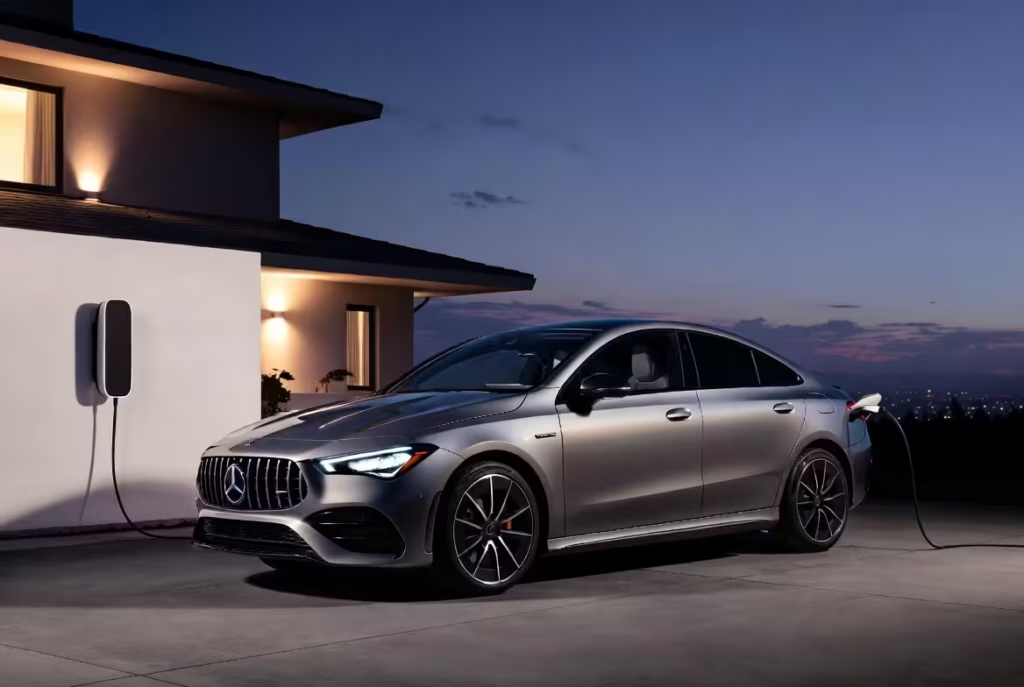
The most affordable entry point is the all-new 2026 Mercedes-Benz CLA Electric. The CLA 250+ begins at approximately $47,250, while the CLA 350 4MATIC starts near $49,800. This model brings Mercedes luxury and advanced technology into a more attainable price range.
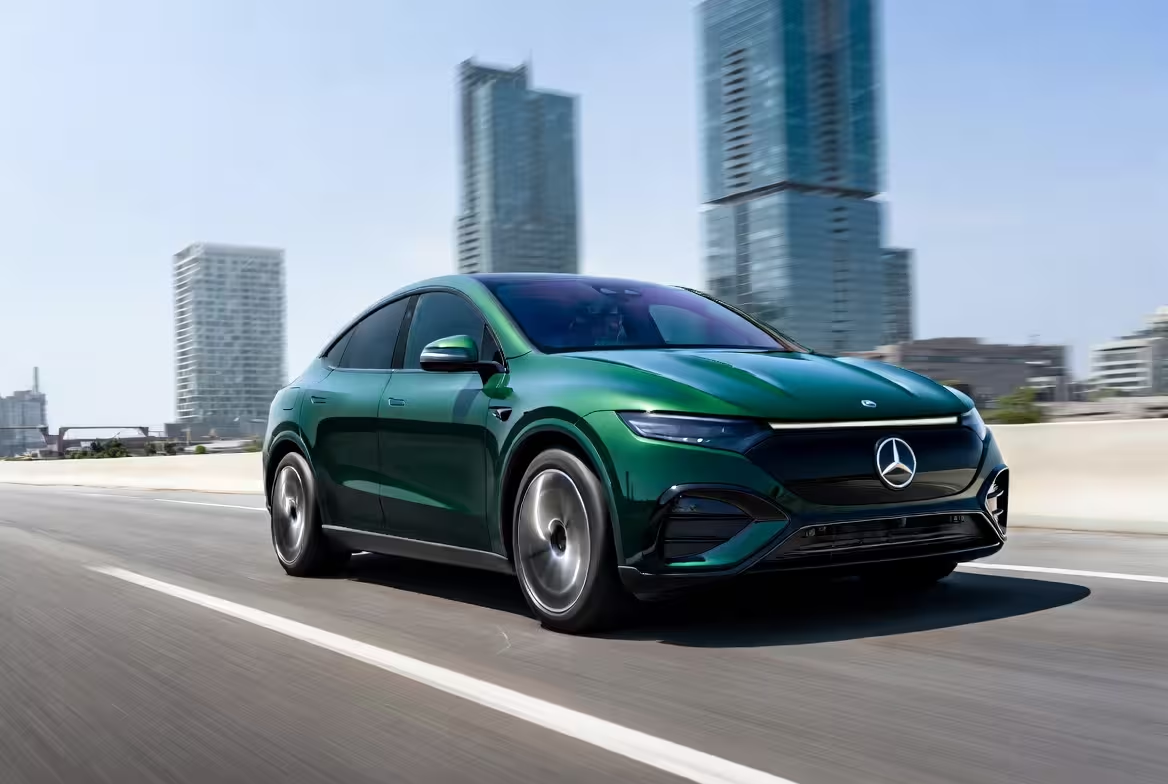
Moving up, the EQB starts around $53,050. It offers flexible seating in a compact crossover format. The EQE sedan and SUV begin in the mid-$60,000 range, with the EQE 320+ SUV listed near $64,950 and similar figures for the sedan. These models balance space, comfort, and strong electric performance.
At the top, the EQS sedan commands premium pricing. The EQS 450+ starts at $99,900, with higher-output versions such as the EQS 580 4MATIC reaching $123,900 and beyond. The EQS SUV sits slightly lower in some configurations, beginning around $89,950. These flagships deliver the highest levels of luxury, range, and technology Mercedes offers in electric form.

Pricing Considerations in Europe
European Mercedes electric car price levels differ by country because of varying VAT rates, registration taxes, and government incentives. The new electric CLA is positioned as a more accessible model, with entry prices generally starting from the equivalent of around $50,000 USD depending on the specific market and equipment. Higher trims and larger models such as the EQE and EQS typically exceed €80,000–€120,000 before any applicable incentives.
Buyers in Europe should use the local Mercedes-Benz configurator for precise figures, as subsidies and tax benefits can significantly affect the final amount paid. Availability remains strong across most European markets, with the full EQ range offered alongside growing charging infrastructure.
What Influences the Mercedes Electric Car Price
Several factors shape the final Mercedes electric car price. Battery capacity directly affects both range and cost. Larger packs, such as those in the EQS, support longer distances but increase the vehicle price. Performance specifications, interior materials, advanced driver assistance systems, and unique features like the MBUX Hyperscreen also add to the total.
Government incentives play a major role in the USA. Federal tax credits may apply to qualifying models, though many luxury EVs exceed current price caps. State-level rebates and utility incentives can further reduce effective cost. In Europe, purchase grants and company-car tax advantages often make electric models more competitive.

Real-World Usability and Driving Experience
Beyond the sticker price, Mercedes electric car price discussions must include ownership realities. Electric models offer lower maintenance costs because they have fewer moving parts than gasoline vehicles—no oil changes, fewer brake jobs thanks to regenerative braking, and simplified powertrains. Electricity costs are typically lower than gasoline for equivalent mileage, especially with home charging.
The driving experience emphasizes smoothness and responsiveness. Instant torque provides confident overtaking, while sophisticated suspension and quiet cabins create a serene atmosphere. The new CLA Electric stands out with claimed ranges exceeding 400 miles in optimal conditions and impressive fast-charging capability, adding practical daily usability.
Interior technology includes the latest MBUX system with intuitive voice control, high-resolution displays, and over-the-air updates that keep the vehicle current without dealer visits. Safety features such as advanced driver assistance systems come standard or as options across the lineup, contributing to strong real-world protection ratings.

How Mercedes Electric Models Compare
When evaluating Mercedes electric car price against competitors, the EQ lineup emphasizes luxury refinement, build quality, and brand prestige. The new CLA Electric competes with premium compact EVs from BMW, Audi, and Tesla by offering distinctive styling and a more traditional Mercedes driving character.
The EQE and EQS models go head-to-head with the BMW i5/i7, Audi A6/A8 e-tron, and Lucid Air in the luxury segment. Buyers often choose Mercedes for superior interior materials, ride comfort, and the reassuring presence of the three-pointed star. Real-world range and charging speeds are competitive, particularly with the latest 800-volt architectures in newer models.

Future Trends Affecting Mercedes Electric Car Price
Battery technology continues to improve, promising lower costs and greater efficiency in coming years. The introduction of the CLA Electric signals Mercedes’ intent to bring premium electric driving to a broader audience. As production scales and supply chains mature, more buyers can expect Mercedes electric car price points to become increasingly competitive.
Future models, including updated C-Class and GLE electric versions, will likely expand the range further. For now, 2026 represents a strong moment to buy, with meaningful technology and a clearer view of total ownership costs.
Key Takeaways on Mercedes Electric Car Prices
The 2026 Mercedes electric lineup offers clear choices at different price levels. The CLA Electric opens the door to Mercedes EV ownership at a more accessible starting point, while the EQE and EQS deliver flagship luxury and capability for those seeking the ultimate expression. Lower running costs, strong performance, and advanced technology add value beyond the initial Mercedes electric car price.

Carefully consider your daily driving distance, home charging options, and available incentives when making a decision. A test drive remains the best way to experience how these vehicles feel on the road.
Key Specifications Section
| Model | Starting Price (USA) | Estimated Range (miles) | Key Highlights |
|---|---|---|---|
| CLA 250+ Electric | $47,250 | 400+ | Most affordable, fast charging, efficient |
| CLA 350 4MATIC Electric | $49,800 | 350–380 | AWD option, premium features |
| EQB | $53,050 | 245–260 | 7-seat flexibility, compact SUV |
| EQE 320+ / SUV | ~$64,950–$67,450 | 260–300 | Balanced luxury and space |
| EQS 450+ Sedan | $99,900 | ~390 | Flagship comfort, advanced tech |
| EQS 580 4MATIC | $123,900 | ~371 | Highest performance and luxury |
FAQ
What is the cheapest Mercedes electric car in 2026?
The new CLA 250+ Electric starts at approximately $47,250, making it the most accessible entry into the Mercedes EQ lineup.
How much does the Mercedes EQS cost?
The 2026 EQS sedan begins at $99,900 for the 450+ model and rises to over $123,000 for higher-performance versions.
Do Mercedes electric cars qualify for tax incentives?
Many models may qualify for federal or state incentives in the USA depending on price and buyer eligibility. Check current IRS guidelines and local programs for exact amounts.
What kind of range can I expect from a 2026 Mercedes EV?
Ranges vary by model and conditions. The CLA Electric offers over 400 miles in ideal scenarios, while EQS models typically deliver 370–390 miles.
Are maintenance costs lower for Mercedes electric cars?
Yes. Electric powertrains require less routine maintenance than gasoline engines, with no oil changes and reduced brake wear from regenerative braking.