
Which Hybrid Car Is the Best in 2026? Top Models Compared

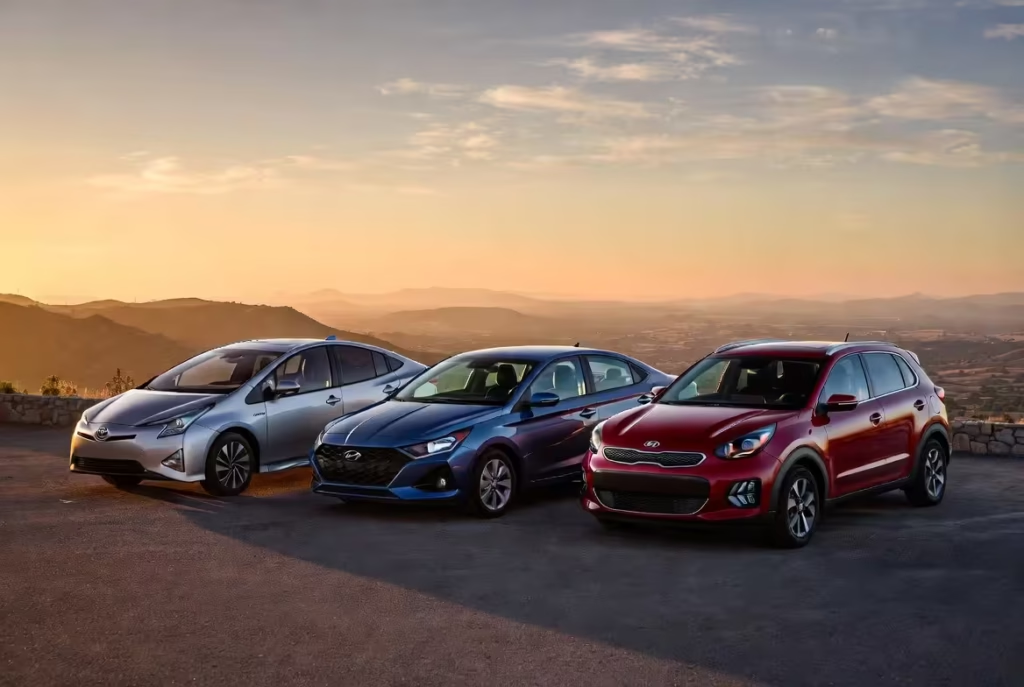


Asking which hybrid car is the best in 2026 has no single answer. The right choice depends on whether you prioritize maximum fuel economy, family space, driving enjoyment, or lower upfront cost. Hybrids have matured into refined, efficient vehicles that deliver strong real-world performance without the charging infrastructure demands of pure electric cars.
Today’s hybrids combine a gasoline engine with electric motors and a battery to improve efficiency, especially in city driving. They offer seamless power delivery and lower running costs than traditional gasoline vehicles while avoiding range anxiety.
Understanding Different Types of Hybrids
Not all hybrids are the same. A mild hybrid uses a small electric motor to assist the gasoline engine and enable features like start-stop, but it cannot drive on electricity alone. A full hybrid (also called self-charging hybrid) can propel the vehicle short distances on electric power and recovers energy through regenerative braking.
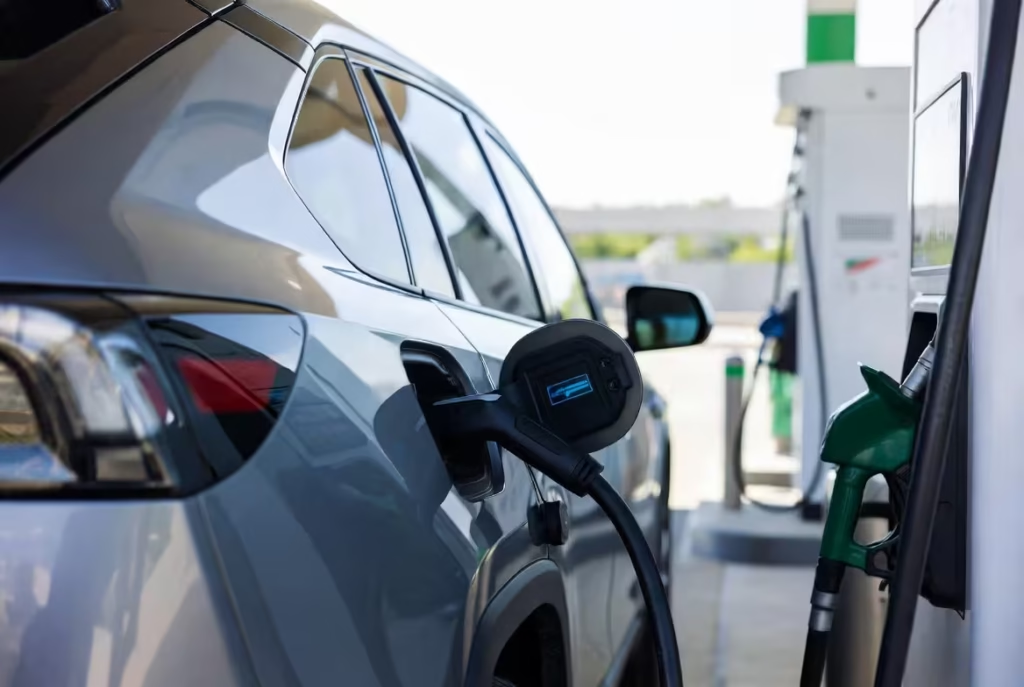
Plug-in hybrids (PHEVs) add a larger battery that can be charged from an outlet, providing 20–50 miles of electric-only driving before the gasoline engine engages. This makes them closer to electric vehicles for daily commutes while retaining long-trip flexibility.
When evaluating which hybrid car is the best, consider how much electric driving you want versus pure gasoline backup. Full hybrids require no plugging in, while PHEVs reward drivers who charge regularly with the lowest operating costs.
Top Contenders for Best Hybrid Car in 2026
Several models stand out across categories based on fuel economy, reliability, features, and owner satisfaction.
Best for Maximum Efficiency: Toyota Prius
The 2026 Toyota Prius continues to lead in fuel economy with up to 57 MPG combined. Its updated design and more engaging handling have moved it beyond its earlier reputation as a basic efficiency machine. The Prius offers a comfortable ride, spacious interior for its size, and strong reliability. Starting prices begin around $29,745. It excels for commuters focused on minimizing fuel stops.

Best Value Compact Sedan: Hyundai Elantra Hybrid
The Hyundai Elantra Hybrid delivers up to 54 MPG combined at a lower starting price near $26,695. It provides a more engaging drive than many expect from a hybrid, with responsive handling and a well-equipped interior. Hyundai’s warranty coverage adds peace of mind. This model frequently ranks high when people ask which hybrid car is the best for budget-conscious buyers who still want modern technology and strong efficiency.
Best Midsize Sedan: Toyota Camry Hybrid
The Toyota Camry Hybrid earns top marks for balanced performance, with around 51 MPG combined and starting prices from approximately $29,000–$30,000. It offers a smooth, quiet cabin, excellent build quality, and the legendary Toyota reliability. Many reviewers and owners consider it the best all-around hybrid sedan for daily driving and family use.
Best Compact SUV/Crossover: Kia Niro Hybrid or Hyundai Tucson Hybrid
For buyers needing more space and versatility, the Kia Niro Hybrid achieves up to 53 MPG combined while starting near $28,885. It provides crossover utility in a compact package with strong efficiency. The Hyundai Tucson Hybrid offers similar appeal with added style and feature content. Both deliver practical cargo space and higher seating positions without sacrificing much fuel economy.

Best Plug-in Hybrid Option: Toyota RAV4 Prime or Prius Prime
If you want electric-only driving, the Toyota RAV4 Prime stands out as a strong PHEV SUV with solid electric range and strong overall capability. The Prius Prime offers impressive electric range in a more efficient package. PHEVs like these shine for drivers who can charge at home or work, delivering very low running costs and strong performance.
Key Factors When Deciding Which Hybrid Car Is the Best
Fuel Economy and Performance
Top hybrids deliver 50+ MPG in real-world mixed driving. Acceleration feels responsive thanks to electric torque fill, and many models now offer sportier tuning. PHEVs add quick electric-only acceleration for short trips.
Interior, Technology, and Safety
Modern hybrids feature intuitive infotainment screens, smartphone integration, and comprehensive driver-assistance suites. Safety ratings are generally excellent across the segment. Look for models with large touchscreens, wireless charging, and available premium audio.

Pricing and Availability in the USA and Europe
In the USA, strong hybrid options start in the mid-$20,000s and climb into the $40,000+ range for loaded or PHEV models. Europe sees similar base pricing adjusted for local taxes, with PHEVs often benefiting from company-car tax advantages and purchase incentives. Availability is excellent for both regions, though exact configurations and waiting times vary by market.
Real-World Usability and Ownership Costs
Hybrids shine in stop-and-go traffic where regenerative braking recovers energy. Most require no special maintenance beyond regular service, and battery warranties typically cover 8–10 years or high mileage. Fuel savings add up quickly, especially with higher gasoline prices. PHEVs further reduce costs if charged regularly.
Environmental Impact
Hybrids produce fewer emissions than pure gasoline cars, particularly in urban driving. PHEVs can operate with zero tailpipe emissions for daily commutes when charged. Over the vehicle’s life, they represent a meaningful step toward lower environmental impact without requiring a full shift to electric infrastructure.

Market Trends and Future Outlook
Hybrid technology continues to improve with better batteries, more powerful electric motors, and refined powertrains. As more buyers seek efficiency without range concerns, the segment grows stronger. Future models will likely offer even higher MPG and more electric capability at competitive prices.
How Hybrids Compare to Pure EVs and Gasoline Cars
Pure electric vehicles offer the lowest operating costs and zero tailpipe emissions but require charging access and planning for longer trips. Traditional gasoline cars provide unlimited range and quick refueling but at higher fuel and maintenance costs. Hybrids and PHEVs sit in the middle—delivering strong efficiency gains with the convenience of gasoline when needed. For many drivers, this balance makes them the most practical choice today.
Conclusion: There Is No Single “Best” Hybrid
The Toyota Prius often tops lists for pure efficiency and proven reliability. The Hyundai Elantra Hybrid wins on value, while the Toyota Camry Hybrid excels as a well-rounded daily driver. For SUV buyers, the Kia Niro Hybrid or RAV4 Prime deliver strong combinations of space and efficiency.
The best approach is to define your priorities—commute distance, passenger needs, budget, and whether you can charge a PHEV—then test drive the top contenders. Each of these models represents a smart, lower-emission choice that saves money at the pump while providing modern driving enjoyment.
Test drive a few options and calculate your potential fuel savings based on your annual mileage. The right hybrid will feel like the best investment for years to come.
Key Specifications Section
| Model | Type | Combined MPG / MPGe | Starting Price (USA approx.) | Strengths |
|---|---|---|---|---|
| Toyota Prius | Full Hybrid | 57 MPG | $29,745 | Top efficiency, refined drive |
| Hyundai Elantra Hybrid | Full Hybrid | 54 MPG | $26,695 | Best value, engaging handling |
| Toyota Camry Hybrid | Full Hybrid | 51 MPG | $29,000–$30,000 | Balanced midsize comfort & reliability |
| Kia Niro Hybrid | Full Hybrid | 53 MPG | $28,885 | Practical compact crossover utility |
| Toyota RAV4 Prime | Plug-in Hybrid | High MPGe + EV range | Mid $40,000s | Electric range + SUV capability |
FAQ
What is the most fuel-efficient hybrid car in 2026?
The Toyota Prius leads with up to 57 MPG combined, making it the top choice for maximum efficiency.
Which hybrid car offers the best value?
The Hyundai Elantra Hybrid stands out for its strong fuel economy, lower starting price, and generous warranty coverage.
Are plug-in hybrids worth it compared to regular hybrids?
PHEVs like the RAV4 Prime or Prius Prime make sense if you can charge regularly. They deliver electric-only driving for short trips plus gasoline flexibility for longer journeys.
How do hybrid maintenance costs compare to gasoline cars?
Hybrids typically have similar or slightly lower maintenance needs. The battery systems carry long warranties, and regenerative braking reduces wear on conventional brakes.
Which hybrid is best for families?
The Toyota Camry Hybrid or Kia Niro Hybrid offer excellent space, safety features, and efficiency for family use.